The Arab Gulf Programme for Development (AGFUND) has officially announced the winners of the 2025 Prince Talal International Prize for Human Development. Chaired by Prince Abdulaziz bin Talal, the prize committee finalized its selections during its 27th meeting at the AGFUND headquarters in Riyadh. Awarding a total purse of $1 million, this iteration of the prestigious global prize rewards pioneering initiatives that support United Nations Sustainable Development Goal 7, which strives to secure affordable, reliable, sustainable, and modern energy infrastructures worldwide.
Executive Summary
- Global Scale: Out of 160 international nominations, 64 advanced to the final evaluation phase before four category winners were selected.
- Sectors Recognized: Laureates span UN bodies, regional non-governmental organizations, social enterprise startups, and individual innovators.
- Vision 2030 Synergy: Capitalizing on Riyadh’s status as a central engine for international development, the prize mirrors the Kingdom’s deep state-backed commitments to climate action.
A rigorous evaluation process culled down a competitive global pool of applicants to locate initiatives delivering measurable human development impact. By placing the operational hub in Riyadh, the program highlights how Gulf-backed capital continues to steer institutional solutions for global energy poverty and systemic climate vulnerability.
Categorized Winners and Technological Highlights
The prize framework divides its $1 million funding pool among four distinct categories to ensure a diversified development impact across public, private, and civil sectors:
- First Category (UN Agencies and International NGOs): Awarded to UNICEF for its “Climate-resilient, Community-led Water Supply Systems” in Myanmar, focusing on the structural intersection of clean water infrastructure and climate adaptation.
- Second Category (National NGOs): Given to Nomadic Assistance for Peace and Development for operations across Kenya and Somalia. The project establishes community-driven conflict resolution frameworks by securing sustainable food supply models.
- Third Category (Government Agencies & Social Enterprises): Claimed by D-Olivette Labs in Nigeria for “The Bio-360: Waste-to-Biofuel AI Solution.” This deployment leverages artificial intelligence algorithms to optimize biomass conversion into high-yield clean biofuels.
- Fourth Category (Individual Initiatives): Conferred to Oorja Development Solutions India Private Ltd for its “Scaling Solar Irrigation-as-a-Service and Climate-Smart Farming Advisory,” removing cost barriers for small-scale agrarian communities adopting clean energy utilities.
The Saudi Perspective: Driving the Clean Energy Paradigm
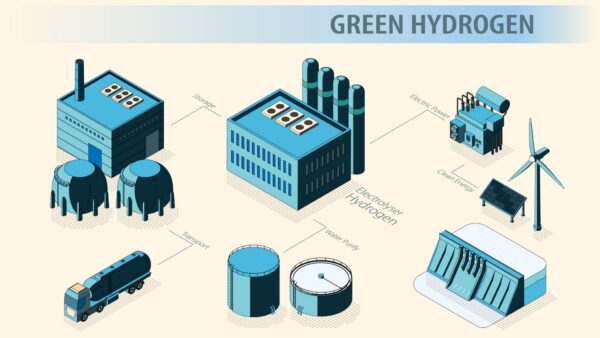
While the 2025 prize winners showcase essential grassroots solutions globally, the foundational architecture of the Prince Talal International Prize serves a core pillar of Saudi Arabia’s overarching strategy under Vision 2030. Operating as a nexus of sustainable development finance from Riyadh, AGFUND bridges the gap between sovereign development goals and execution capabilities on the ground. By funding distributed digital tools like AI biofuel systems and decentralized solar networks, the Kingdom signals its commitment to incubating technology-driven alternatives to legacy infrastructure. This operational framework mirrors state level transformations within the GCC, including multi-billion dollar domestic investments executed by entities like ACWA Power and the Public Investment Fund (PIF) into green hydrogen and grid scale solar arrays.
Future Outlook: Shifting Target to Global Healthcare
Looking ahead, the prize committee announced that the 2026 cycle will pivot to United Nations Sustainable Development Goal 3, focusing explicitly on “Good Health and Well-being.” The upcoming submission cycle will prioritize international projects that scale healthcare accessibility, deploy digital medical technologies, and develop resilient public health frameworks across vulnerable economic zones.