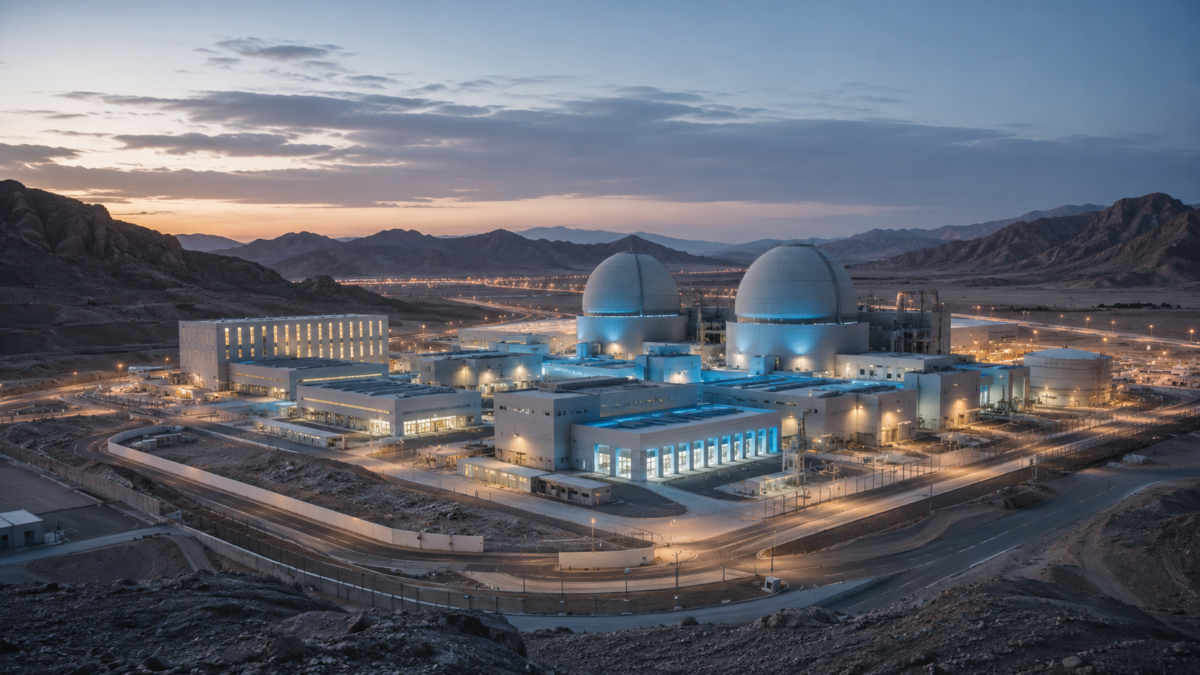
The United States and Saudi Arabia have signed a landmark 30-year civil nuclear cooperation agreement, establishing a comprehensive legal framework for technological collaboration, peaceful energy production, and potential domestic uranium enrichment. Signed by Saudi Energy Minister Prince Abdulaziz bin Salman and US Energy Secretary Chris Wright, the bilateral treaty, commonly referred to as a “123 Agreement,” represents a pivotal shift in GCC energy architecture and bilateral economic relations.
According to initial reporting from The Guardian, the accord allows for joint technical evaluations regarding future uranium processing facilities inside the Kingdom. This partnership accelerates the Kingdom’s long-term strategy to diversify its power generation matrix while integrating advanced nuclear engineering into its industrial ecosystem.
Executive Summary
- Bilateral Commitment: A 30-year “123 Agreement” establishes the official legal structure for US-Saudi civil nuclear infrastructure and technological transfers.
- Industrial Diversification: Provisions include joint technical evaluations for domestic fuel cycle development, unlocking baseload zero-carbon power for national grid integration.
- Commercial Opportunities: US nuclear technology providers and engineering firms gain structured market entry to support Saudi Arabia’s expanding nuclear framework.
Unlocking Civil Nuclear Cooperation and Technology Transfers
The signed treaty creates the statutory mechanism required under US law for significant transfers of nuclear technology, equipment, and expertise. By establishing high-level regulatory oversight, the agreement opens the door for tier-one American engineering consortia and reactor vendors to participate directly in Saudi Arabia’s civil energy procurement projects.
A key element of the accord is the inclusion of joint technical assessments to evaluate the feasibility of establishing controlled domestic enrichment capabilities. While previous regional frameworks restricted local fuel cycle operations, this bilateral structure establishes a collaborative protocol for evaluating infrastructure readiness, environmental parameters, and regulatory safeguards before operational deployment.
The Saudi Perspective: Driving Vision 2030 Clean Energy Goals
For Saudi Arabia, integrating civil nuclear power into the national energy grid is a cornerstone of Vision 2030. The Kingdom’s National Renewable Energy Program aims to optimize the energy mix, reducing heavy crude combustion for power generation while expanding solar, wind, and low-carbon baseload sources. As part of the national commitment to achieve net-zero carbon emissions by 2060, civil nuclear power provides uninterrupted, high-capacity electricity required to run heavy industrial cities, desalination plants, and advanced computing infrastructure.
Expanding the national energy sector into nuclear engineering aligns with broader initiatives under Clean Energy investment strategies. Beyond electricity generation, local fuel cycle infrastructure and research reactors will catalyze high-value domestic jobs, foster university R&D partnerships in atomic physics, and build specialized technical capabilities across the domestic workforce.