Urban centers globally lose billions of dollars annually to traffic congestion, last-mile delivery inefficiencies, and road surface maintenance. Within Saudi Arabia’s flagship megacity project, NEOM, planners are executing a structural paradigm shift by eliminating surface roads entirely. At the core of ‘The Line’, a 170-kilometer linear cognitive city, lies an underground, multi-layered logistics and transit network engineered to handle 100 percent of freight and human mobility without a single personal automobile on the surface.
Executive Summary
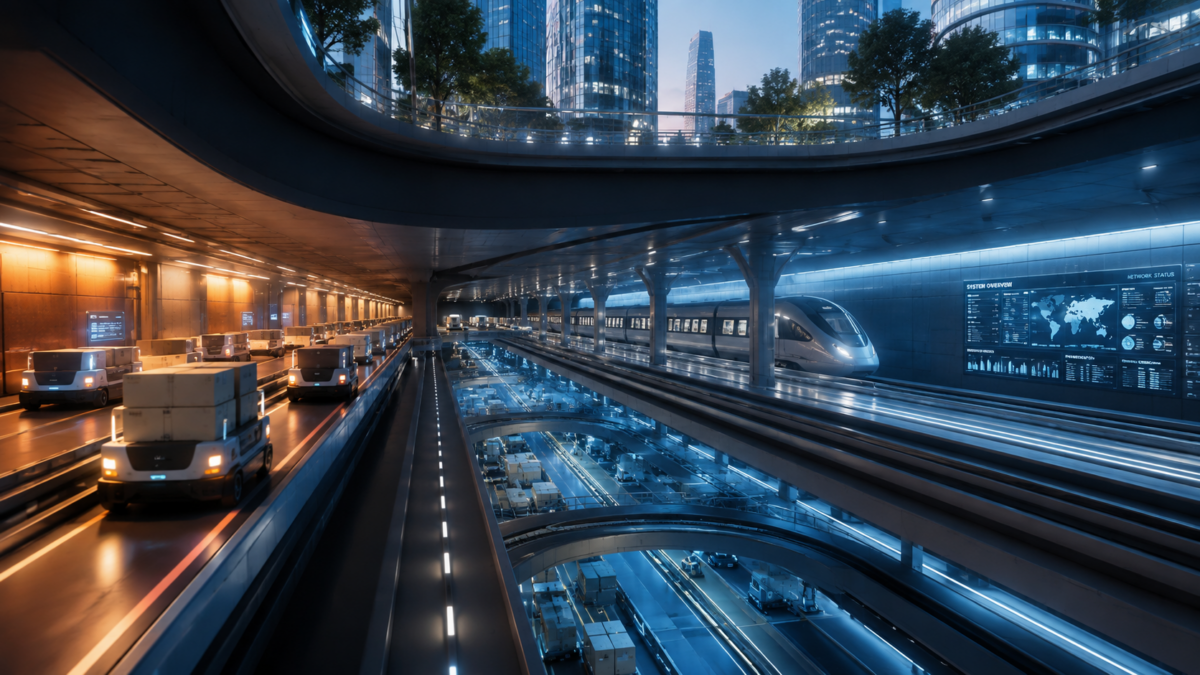
- Zero Surface Roads: The Line replaces traditional street networks with a vertically layered city, moving all vehicular, freight, and utility infrastructure underground.
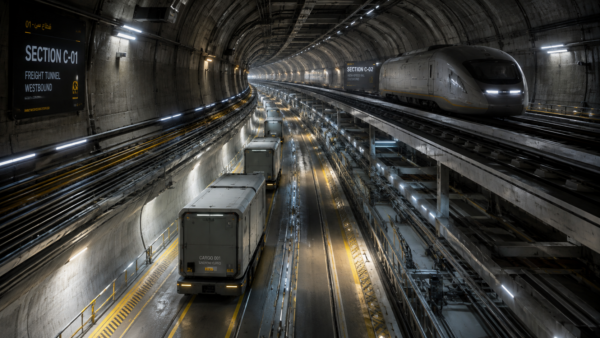
- Subterranean Infrastructure Layer: The city utilizes a subterranean ‘Spine’ consisting of dedicated high-speed passenger rail and autonomous freight transportation tunnels.
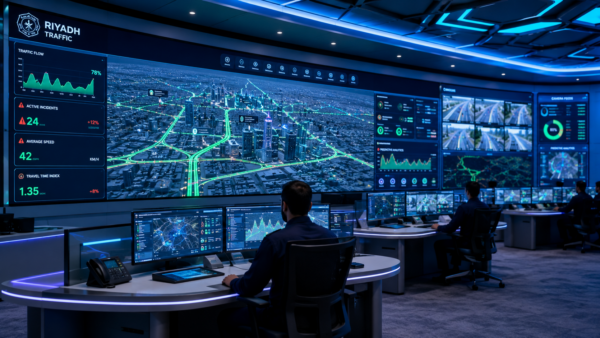
- AI-Orchestrated Logistics: Real-time cognitive systems manage last-mile distribution, routing autonomous delivery pods to localized hubs within a five-minute walk of every resident.
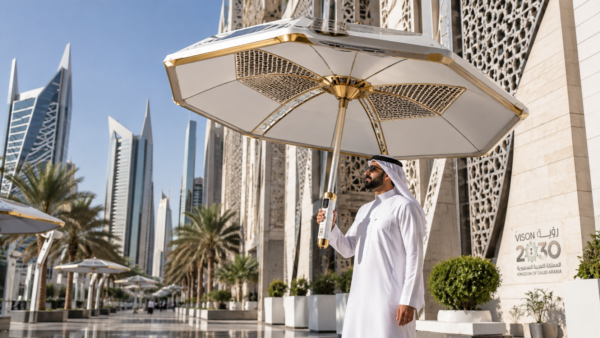
- Vision 2030 Impact: Demonstrates a scalable model for zero-emission urban development, aligning directly with the Saudi Green Initiative and economic diversification goals.
The Architecture of the Subterranean Spine
Modern municipal planning typically allocates up to 30 percent of urban land area strictly to surface roads and parking structures. The Line inverts this approach through ‘Zero Gravity Urbanism’, stacking residential, commercial, and civic spaces vertically while pushing heavy transport below ground.
The operational framework relies on a subterranean corridor known as ‘The Spine’. Engineering joint ventures are actively constructing extensive tunneling networks, including 27 kilometers of high-capacity underground tunnels designed specifically for high-speed transit and automated freight distribution. By segregating physical movement into dedicated layers, the surface environment remains entirely pedestrianized, noise-free, and carbon-neutral.
AI-Driven Autonomous Logistics and Last-Mile Distribution
Eliminating surface fleets requires an automated logistics workflow. The Line integrates artificial intelligence, IoT sensor arrays, and autonomous mobile robots (AMRs) to construct a continuous supply chain from regional ports to individual residential modules.
- Primary Freight Transport: Heavy cargo moves directly from regional industrial hubs like Oxagon into the subterranean rail network via automated container units.
- Automated Distribution Nodes: Secondary logistics sorting occurs at underground transfer stations, where AI engines categorize goods based on destination and urgency.
- Last-Mile Delivery Pods: Autonomous pods and dedicated service conduits deliver goods vertically through the city’s utility cores, eliminating the need for traditional delivery trucks.
This automated flow reduces delivery latency to a fraction of standard municipal averages while eliminating the risk of traffic-related bottlenecks.
Engineering Efficiency and Structural Advantages
By removing vehicle impact, weather degradation, and surface traffic conflicts, the underlying transit infrastructure achieves significantly higher operational longevity. Electric autonomous systems operating within controlled subterranean corridors consume less energy per ton-kilometer than traditional surface fleets.
Furthermore, because the entire logistics network operates digitally, the city’s predictive cognitive engine continuously optimizes dispatch routes and energy loads in real time. This integration represents a core benchmark for global Smart Cities engineering.
Aligning Infrastructure with Vision 2030
The elimination of surface transport infrastructure directly addresses multiple targets under Saudi Vision 2030. By reducing urban logistics emissions to zero and preserving 95 percent of the surrounding natural landscape, NEOM establishes a functional prototype for sustainable urbanization. As the Kingdom positions itself as a premier global logistics hub connecting Asia, Europe, and Africa, the technological frameworks validated at The Line provide a blueprint for next-generation supply chain infrastructure across the Middle East.