As Saudi Arabia rapidly expands its digital backbone under Vision 2030, the energy required to compute and cool enterprise workloads has transitioned from a backend utility consideration to a strategic imperative. Operational capacity in the Kingdom surpassed 467MW in early 2026, putting Saudi Arabia firmly on track to hit its broader 1.5GW national milestone by 2030. However, scaling gigawatt-ready compute environments in arid climates introduces severe thermodynamic and power distribution challenges.
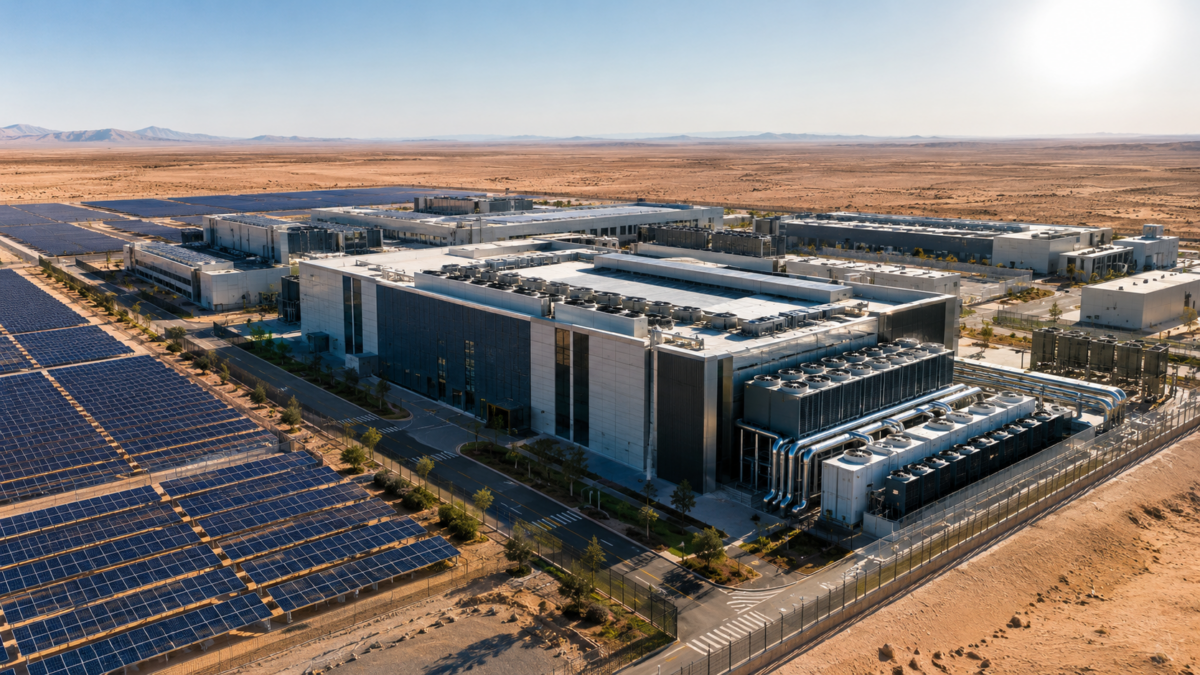
Meeting these compute demands requires scaling power generation and thermal mitigation strategies in tandem. Specialized infrastructure projects, such as the 192MW multi-facility hyperscale buildouts spearheaded by Al Moammar Information Systems (MIS) alongside key utility partners, demonstrate how energy efficiency and advanced thermal engineering are reshaping the regional landscape.
- Capacity Expansion: Saudi Arabia’s operational data center footprint reached 467MW in early 2026, progressing toward national targets of 1.5GW by 2030.
- Thermal Constraints: High regional ambient temperatures mean cooling infrastructure can claim up to 40% of total facility power consumption if unoptimized.
- Strategic Power Integration: Tri-party coordination between MIS, ACWA Power, and the Saudi Electricity Company (SEC) is establishing new standards for co-locating solar PV, battery storage, and high-density compute.
- Water-Preserving Architecture: Shift toward direct-to-chip liquid cooling and dry cooling loops mitigates reliance on municipal water sources without compromising Power Usage Effectiveness (PUE).
The Thermal Challenge of Arid Digital Infrastructure
In high-density computing facilities, heat dissipation remains the single largest operational friction point. Legacy data centers deployed across the GCC region traditionally relied on air-cooled chillers or evaporative water systems. In peak summer conditions where ambient temperatures cross 45°C, standard air-cooling systems suffer sharp drops in efficiency, forcing facilities to consume significantly more electricity simply to maintain safe inlet temperatures.
Evaporative cooling solutions present a secondary challenge by consuming substantial volumes of water per kilowatt-hour of compute load. For a country prioritizing sustainable resource management under the National Water Strategy, scaling hyperscale campuses requires alternative thermal management paradigms. Modern facilities being constructed across Riyadh, Dammam, and NEOM are pivoting toward hybrid closed-loop systems, waterless dry coolers, and direct-to-chip liquid cooling to isolate compute hardware from external climate extremes.
Infrastructure Alignment: ACWA Power, MIS, and SEC
To deliver continuous power to high-density racks without overwhelming regional grid capacity, developers are integrating generation, transmission, and computation at the site selection level. MIS has consistently spearheaded large-scale digital infrastructure development funds, delivering co-location facilities designed to handle elevated power densities. Simultaneously, utility giants like ACWA Power are deploying utility-scale solar photovoltaic arrays paired with large-scale Battery Energy Storage Systems (BESS) to supply clean, predictable power curves.
The Saudi Electricity Company (SEC) plays a fundamental role in reinforcing high-voltage transmission pathways to these specialized zones. By establishing dedicated sub-stations and grid interconnections directly adjacent to planned data center hubs, SEC mitigates localized distribution bottlenecks. This integrated approach allows facility operators to achieve lower Power Usage Effectiveness (PUE) ratings while reducing reliance on fossil-fuel baseload generation during peak grid hours.
Transitioning to Advanced Liquid Cooling Paradigms
As artificial intelligence workloads and high-performance computing (HPC) clusters push rack power densities from 10kW to well over 40kW per cabinet, conventional raised-floor air cooling reaches its physical limits. Local operators are increasingly implementing high-density liquid cooling topologies:
- Direct-to-Chip (Cold Plate) Cooling: Liquid coolant is circulated directly across high-TDP processors, absorbing thermal energy at the source and transferring it away from the rack via closed loops.
- Immersion Cooling: Entire server blades are submerged in non-conductive dielectric fluid, eliminating the need for internal fans and drastically reducing mechanical cooling energy demands.
- Integrated Heat Recovery: Captured thermal energy from liquid cooling loops is repurposed for secondary facility functions or ambient climate balancing within secondary structures.
Adopting these architectures enables operators to maintain optimal hardware junction temperatures, extend component lifespans, and safeguard continuous uptime during extreme summer heatwaves.