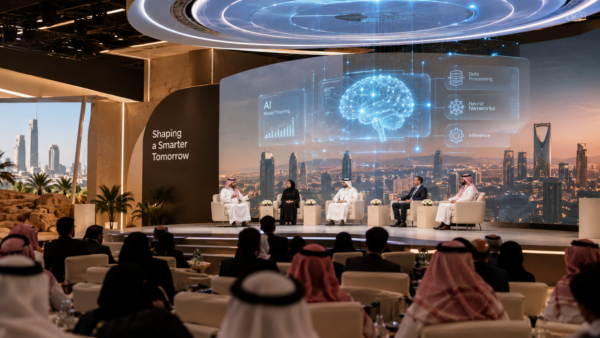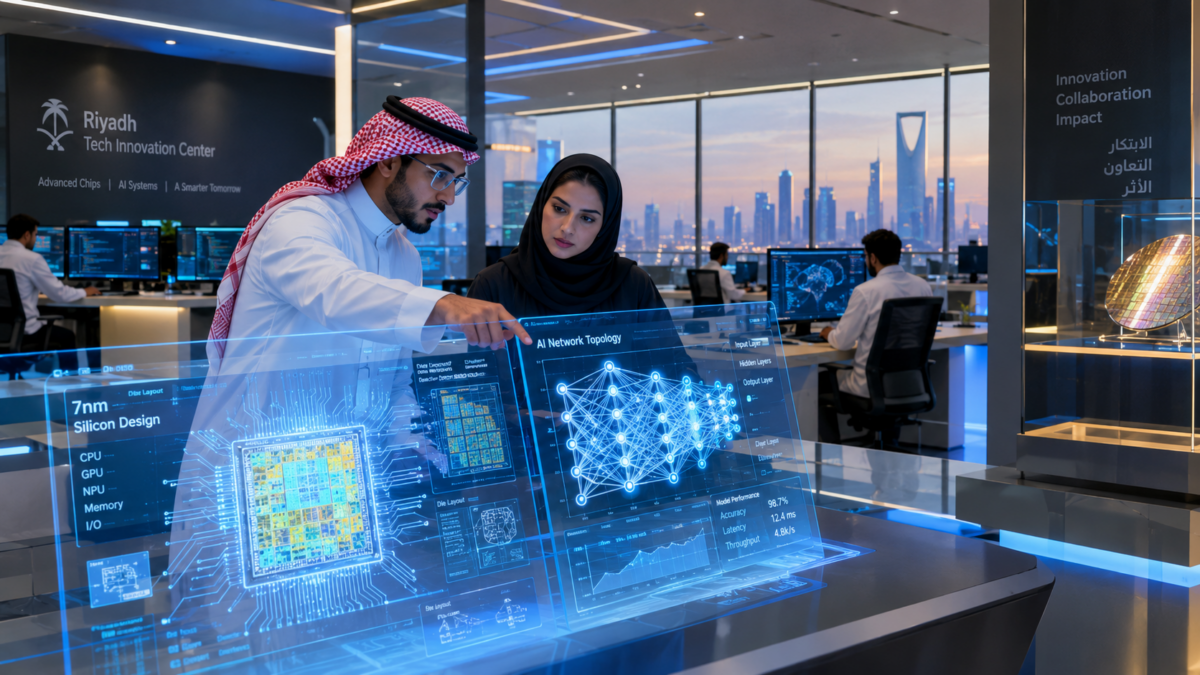
As Saudi Arabia accelerates its national strategy to become a global technology hub, localizing deep tech capabilities and securing sovereign compute infrastructure have moved to the center of the Kingdom’s digital agenda. Coordinated through high-level engagements with the Ministry of Communications and Information Technology (MCIT), global tech leaders Nokia and Intel are establishing specialized Research and Development (R&D) operations in Riyadh.
These facilities mark a structural shift in how international technology partners engage with the Kingdom, transitioning from vendor relationships to co-development models that produce local intellectual property, localized AI-driven network software, and “Made in Saudi” software innovations designed to serve both regional and global markets.
- Sovereign Infrastructure Advancement: Dedicated R&D operations localizing silicon collaboration, AI compute frameworks, and network orchestration software within Saudi borders.
- Network Energy Optimization: Nokia’s Riyadh R&D center targets a 10% to 15% reduction in telecom network energy costs alongside up to 30% spatial and energy savings for AI data center networks.
- Talent Localisation: Specialized training programs, certification tracks, and international boot camps designed to build Saudi engineering and software capabilities.
- Strategic Tri-Party Alignment: Close coordination between MCIT, global infrastructure vendors, and domestic AI computational ecosystems like HUMAIN to scale national capacity.
Bridging Sovereign Compute with Autonomous Networks
As artificial intelligence workloads scale exponentially, data center compute demands and interconnect traffic require intelligent, resilient physical infrastructure. Nokia’s new R&D center in Riyadh focuses directly on developing AI-powered network automation and orchestration software. The center specializes in Service Management and Orchestration (SMO), Self-Organizing Networks (SON), Autopilot systems, and rApps to enable communications infrastructure to self-configure, self-heal, and optimize in real time.
In parallel, engagements between MCIT and Intel focus on expanding semiconductor collaborations, exploring Intel Foundry operations in the Kingdom, and integrating Intel advanced computing architectures into national compute platforms. By combining localized chip design capabilities with AI-native network automation, Saudi Arabia is engineering an end-to-end sovereign technology stack.
Strategic Synergy: MCIT, Nokia, and Intel
The technical alignment between state policy, telecom infrastructure, and semiconductor architecture forms the foundation of the Kingdom’s deep tech localization strategy:
- Ministry of Communications and Information Technology (MCIT): Formulates overarching digital economy strategy, secures global technology partnerships, and drives national deep tech localization mandates.
- Nokia: Supplies AI-powered network automation software, leads localized software R&D in Riyadh, and explores AI-native 6G technology tracks.
- Intel: Collaborates on advanced computing hardware, semiconductor ecosystem integration, and computational capabilities that support sovereign AI data center deployments.
Core Capabilities of the Riyadh R&D Facilities
To meet stringent national security, operational efficiency, and sustainability targets, these newly established facilities focus on four key technological pillars:
- Autonomous Network Orchestration: Developing self-healing software models that dynamically manage network load balancing and reduce manual operational interventions.
- Data Center Energy Reduction: Designing specialized cooling and compute frameworks aimed at cutting data center power and spatial footprints by up to 30%.
- Sovereign IP Generation: Creating export-ready “Made in Saudi” software solutions tailored for communications service providers and enterprise networks globally.
- Advanced Talent Pipeline: Establishing structured boot camps and technical certifications to transition local graduates into high-value research and software engineering roles.
Internal Linking Strategy
To explore continuous updates on national AI strategy, sovereign compute infrastructure, and deep technology deployments across the Kingdom, visit our dedicated AI & Deep Tech coverage portal.