The Living Sentinels of Najran: Ancient Palm Trees and the Future of Sustainable Farming
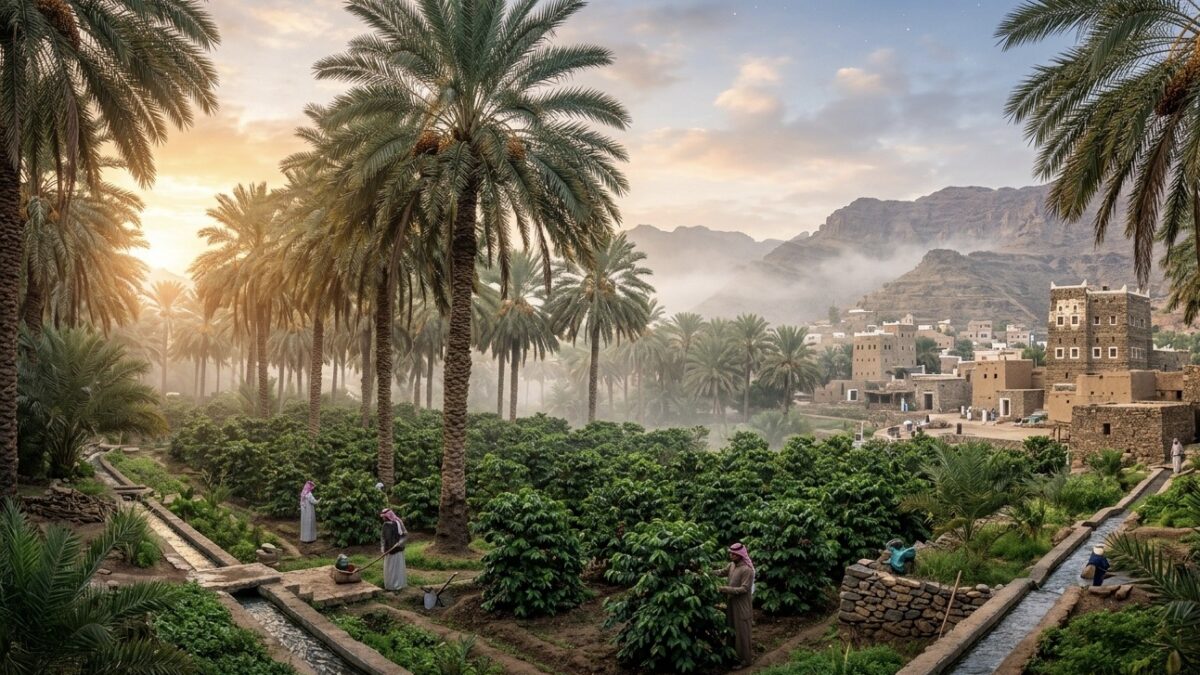
In the fertile valleys of Najran Province, ancient palm trees stand as more than just agricultural assets; they are the living architectural and cultural backbone of the region. As Saudi Arabia advances its environmental and food security goals under Vision 2030, the half-million palm trees of Najran serve as a primary example of how traditional heritage can power modern sustainable ecosystems.
Executive Summary
- Cultural Legacy: Palm trees are deeply ingrained in Najrani identity, symbolizing generational patience and generosity.
- Economic Powerhouse: Najran hosts over 500,000 trees, contributing an impressive 40,000 tons of premium dates to the national market annually.
- Circular Economy: Beyond fruit, every part of the tree—from trunks for infrastructure to fibers for artisanal goods—supports local self-sufficiency.
- Agricultural Innovation: Regional farmers have pioneered an integrated system, intercropping towering palms with shade-loving coffee trees to optimize land use.
For centuries, the Najrani people have looked to the palm tree as a source of survival and industry. This relationship has evolved into a sophisticated agricultural sector that blends ancient wisdom with modern production demands. Today, these trees provide the foundational shade for the region’s growing coffee industry, creating a microclimate that enhances biodiversity and crop yield.
Integrated Agriculture: The Palm and Coffee Synergy
One of the most notable developments in Najran’s News and agricultural updates is the success of intercropping. By utilizing the vertical height of the date palm, farmers create a natural canopy. This “towering shade” is essential for the delicate coffee bushes below, demonstrating a natural, low-tech solution to heat management that predates modern climate-control technology.
The Saudi Perspective: Sustainability and Vision 2030
The preservation and expansion of Najran’s palm groves align directly with the Saudi Green Initiative and the Kingdom’s drive for food sovereignty. By leveraging indigenous farming techniques—such as the multi-use of palm fronds and trunks—Najran is a regional leader in the circular bio-economy. For enterprise leaders in the AgTech and logistics sectors, Najran represents a significant opportunity to scale traditional “intercropping” models through the use of IoT sensors and smart irrigation, further increasing the 40,000-ton annual output while reducing water consumption.