

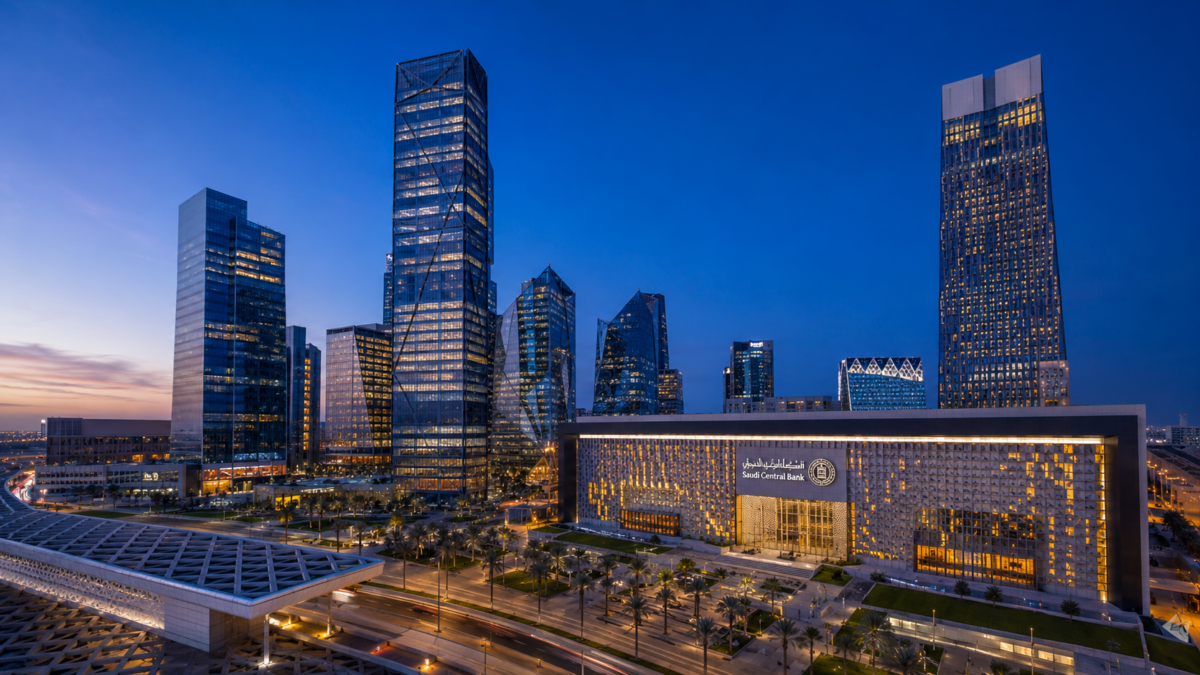
The Saudi banking sector continues to showcase robust fundamental health amid shifting global macroeconomic indicators. According to the latest monetary data released by the Saudi Central Bank, also known as SAMA, commercial banks in the Kingdom registered a 6.1 percent year-on-year increase in profits before zakat and tax for April, reaching SR8.24 billion ($2.18 billion). This solid annual performance highlights the sector’s capability to sustain profitability while simultaneously financing the massive capital requirements of Vision 2030 diversification projects.
Executive Summary
- Steady Annual Profitability: Pre-tax profits climbed 6.1 percent year on year to SR8.24 billion, showcasing strong core earnings power despite a routine 18 percent monthly dip from March.
- Mortgage Market Rebound: New mortgage originations surged by a massive 51.1 percent month on month to SR6.3 billion, marking a nine-month high.
- Liquidity Stabilization: The simple loan-to-deposit ratio improved significantly, dropping 116 basis points to 108.8 percent to ease recent funding strains.
- Strategic Deposit Inflow: Commercial bank deposits expanded by SR52 billion during the month, driven by a sharp rise in time and savings accounts.
While the annual growth remains firmly positive, monthly earnings experienced an expected 18 percent decline compared to March, touching their lowest level in six months. This variance reflects a more calculated deployment strategy by local lenders as they actively recalibrate their balance sheets against global funding pressures and regional geopolitical dynamics.
Liquidity Rebounds as Deposits Outpace Corporate Lending
For several quarters, rapid credit expansion in the Kingdom has outpaced organic deposit growth, encouraging institutions to tap international capital markets. However, April data reveals a meaningful stabilization in systemic liquidity. The simple loan-to-deposit ratio decreased by 116 basis points to 108.8 percent, sitting substantially lower than the peak of 113.2 percent recorded last November. When utilizing SAMA’s adjusted metrics, the ratio drops to a highly conservative 78.9 percent.
This structural improvement was fueled by a net monthly deposit inflow of SR52 billion, bringing total domestic deposits to SR3.1 trillion. Notably, corporate and retail savers capitalizated on attractive yields, pushing time and savings deposits up by SR75.3 billion to SR1.32 trillion, which effectively counterbalanced a minor contraction in non-interest-bearing demand deposits.
Real Estate Sector Surges via Enhanced Regulatory Frameworks
A major catalyst for the month’s financial performance was a sudden, powerful resurgence in domestic real estate financing. An independent analysis by Al Rajhi Capital indicates that new mortgage originations leaped 51.1 percent month on month to SR6.3 billion, securing the strongest performance since mid-2025. This stabilization suggests that the real estate market is absorbing elevated global interest rates effectively.
This upward trajectory is directly tied to recent structural overhauls within the property ecosystem. Legal and institutional updates introduced over the past 18 months have stimulated homeownership demand among both Saudi nationals and foreign investors. This regulatory maturity is actively transferring into sustained asset generation for commercial banks.
Strategic Balance Sheet Management Under Vision 2030
SAMA’s sovereign balance sheet adjusted slightly during April, with total centralized assets contracting by SR15.9 billion to SR1.95 trillion, primarily due to strategic reallocations of foreign bank deposits into international securities. Concurrently, commercial banking assets expanded to SR5.08 trillion. Private sector credit demand remained resilient, growing by SR20.1 billion to reach a total allocation of SR3.23 trillion, while public sector claims expanded by SR8.8 billion to SR922.7 billion.
International risk mitigation also improved during the month. Local commercial lenders optimized their global risk profiles, elevating total foreign assets to SR431 billion while shrinking foreign liabilities to SR661.5 billion. This coordinated correction effectively reduced the sector’s net foreign liability position to SR230.5 billion, down from SR262.3 billion in March, giving the Kingdom’s financial framework an excellent buffer to navigate any prolonged external stress scenarios safely.
