Saudi Arabia Deploys AI and Satellite Technology for Hajj Environmental Monitoring
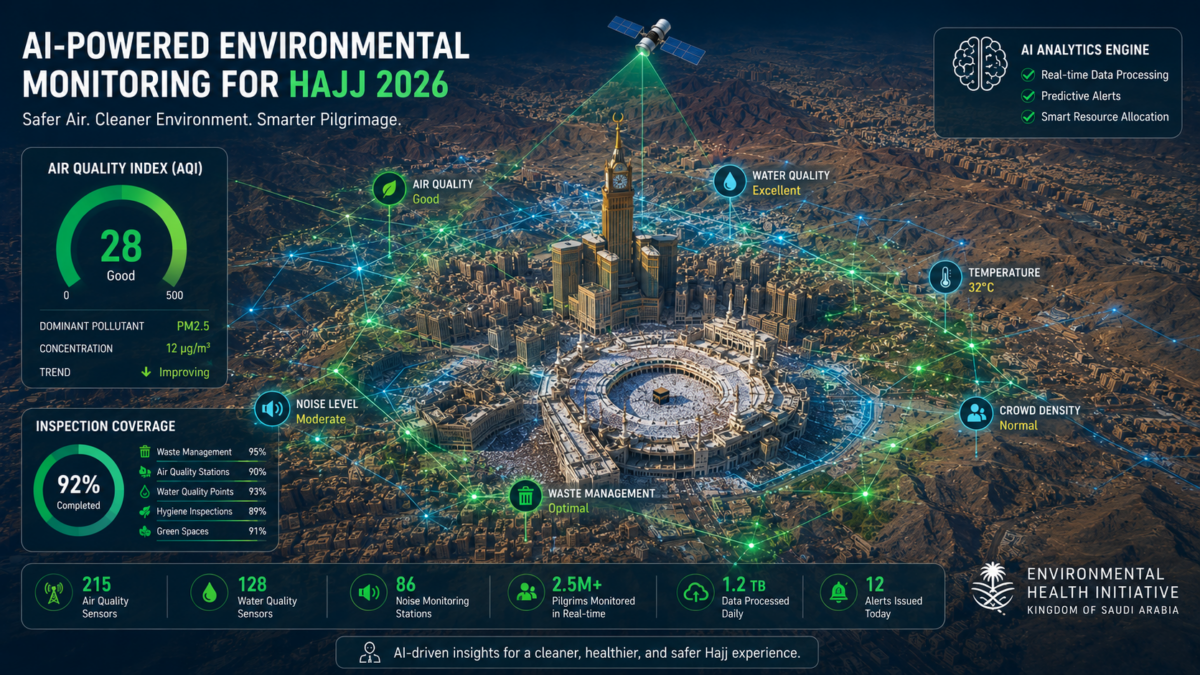
Saudi Arabia has significantly strengthened its environmental protection efforts during Hajj 2026 through the use of advanced technologies, including artificial intelligence and satellite imagery. According to the National Center for Environmental Compliance (NCEC), environmental inspection activities increased by 145 percent compared to the previous Hajj season.
Ali Al-Ghamdi, CEO of the NCEC, stated that more than 200 satellite images were analyzed using AI-powered systems and reviewed by environmental specialists. This approach enabled broader monitoring coverage around the Two Holy Mosques and surrounding holy sites while improving the accuracy and efficiency of inspection operations.
The center responded to over 100 environmental reports during the season, with approximately half of the cases identified through satellite monitoring. This technology-assisted approach allowed inspection teams to quickly locate and address environmental concerns.
Large-Scale Inspection and Laboratory Testing
To further enhance environmental oversight, the NCEC conducted more than 1,800 inspection rounds and carried out over 2,300 laboratory tests across Makkah and Madinah. Around 250 cases of noncompliance were identified, with 95 percent related to administrative and organizational issues, while only 5 percent involved significant environmental violations.
Air Quality and Pollution Forecasting
Air quality monitoring was another key focus area. Nine air quality monitoring stations were deployed around major pilgrim gathering locations. For the first time, the center introduced a 24-hour pollution forecasting program, helping authorities identify potential emission sources and prevent pollution levels from escalating.
Noise Pollution and Waste Management
Noise pollution monitoring was expanded through six fixed monitoring stations and portable measuring devices used by inspectors throughout Makkah, the holy sites, roads, and tunnels leading to the Grand Mosque. All recorded noise levels remained within permissible limits during the pilgrimage season.
The NCEC also closely supervised waste management operations, particularly the safe disposal of solid and liquid waste from sacrificial animal slaughter activities in Makkah, Madinah, and the holy sites.
Post-Hajj Environmental Analysis
Looking ahead, the center plans to continue utilizing satellite technology after the Hajj season. More than 1,800 soil and water analyses will be conducted once pilgrims depart to ensure environmental sustainability and preserve the natural characteristics of the affected areas. This initiative complements SDAIA Strengthens Technical Infrastructure at Border Ports to Facilitate Pilgrim Departures After Hajj 1447 AH, where AI-driven systems supported the broader Hajj ecosystem.
The successful integration of AI, satellite imagery, and real-time monitoring systems demonstrates Saudi Arabia’s commitment to leveraging technology to protect the environment while supporting millions of pilgrims during one of the world’s largest annual gatherings.
Frequently Asked Questions
What technology did Saudi Arabia use to monitor the environment during Hajj 2026?
Saudi Arabia used artificial intelligence, satellite imagery, real-time air quality monitoring stations, noise pollution sensors, and laboratory testing systems managed by the National Center for Environmental Compliance.
By how much did environmental inspections increase during Hajj 2026?
Environmental inspection activities increased by 145 percent compared to the previous Hajj season, according to the NCEC.
What was the first-time initiative introduced for air quality during Hajj 2026?
A 24-hour pollution forecasting program was introduced for the first time, helping authorities identify potential emission sources and take preventive action before pollution levels could escalate.
How many laboratory tests were conducted during Hajj 2026?
The NCEC conducted over 2,300 laboratory tests across Makkah and Madinah as part of its enhanced environmental oversight program.
What will happen to environmental monitoring after Hajj 2026?
The NCEC plans to conduct more than 1,800 soil and water analyses after pilgrims depart to ensure long-term environmental sustainability across the affected holy sites.