Saudi Arabia has taken a definitive step toward cementing its status as an undisputed global titan in clean energy exports. Through a series of high-level strategic agreements and memoranda of understanding (MoUs) signed with leading European energy conglomerates, the Kingdom is rapidly building a comprehensive renewable energy and green hydrogen export value chain designed to power European markets directly from the Arabian Peninsula.
Executive Summary
- Strategic MoUs Signed: High-level agreements executed in Riyadh under the supervision of the Ministry of Energy to establish cross-border clean energy corridors.
- IMEC Alignment: The initiative directly leverages Saudi Arabia’s foundational leadership role in the India-Middle East-Europe Economic Corridor.
- Consortium Powerhouse: ACWA Power partnered with major European off-takers including Edison S.p.A., TotalEnergies, Zhero Europe, and EnBW.
- Infrastructure Foundations: Technical alliances formed with Siemens Energy, Hitachi, and GE Vernova to pioneer ultra-low-loss HVDC transmission networks.
- Yanbu Hub Catalyst: A Joint Development Agreement secures the 2030 operational timeline for the landmark Yanbu Green Hydrogen Hub.
The landmark signings took place in Riyadh under the direct supervision of the Ministry of Energy, in the presence of Prince Abdulaziz bin Salman bin Abdulaziz Al Saud, Saudi Arabia’s Minister of Energy. Hosted during a specialized workshop organized by regional utility pioneer ACWA Power, the event marks a watershed moment in cross-border infrastructure deployment.
Driving the IMEC Energy Architecture
This macro-regional initiative serves as an operational cornerstone for the India-Middle East-Europe Economic Corridor (IMEC). As a critical transnational infrastructure network, IMEC is designed to integrate trade, logistics, and digital frameworks, while positioning Saudi Arabia as the vital logistical and energy bridge between Asia and the European continent.
To realize this corridor, ACWA Power entered into a consortium-level multi-party MoU with European tier-one energy providers, including Italy’s Edison S.p.A., France’s TotalEnergies Renewables SAS, Zhero Europe B.V., and Germany’s EnBW. The collaborative framework will immediately launch comprehensive feasibility studies into large-scale upstream renewable assets within the Kingdom, solely dedicated to the continuous transmission of clean electricity northward.
Advanced Interconnection and HVDC Infrastructure
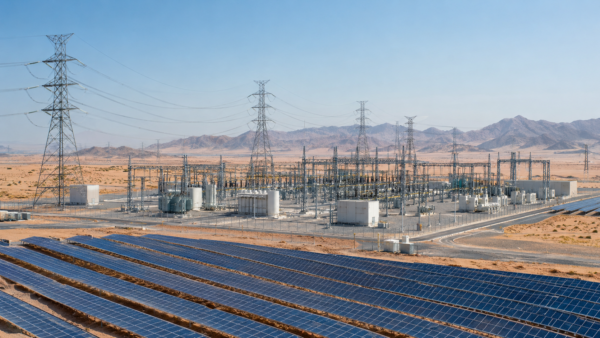
Recognizing that massive generation capacity requires next-generation transport systems, ACWA Power simultaneously executed specialized technical pacts with global infrastructure giants, including CESI, Prysmian, GE Vernova, Siemens Energy, and Hitachi. These partnerships focus strictly on developing advanced cross-continental grid interconnections and High-Voltage Direct Current (HVDC) technologies capable of reliably transporting gigawatt-scale electricity over thousands of kilometers with minimal transmission loss.
The Yanbu Green Hydrogen Hub Paces the Transition
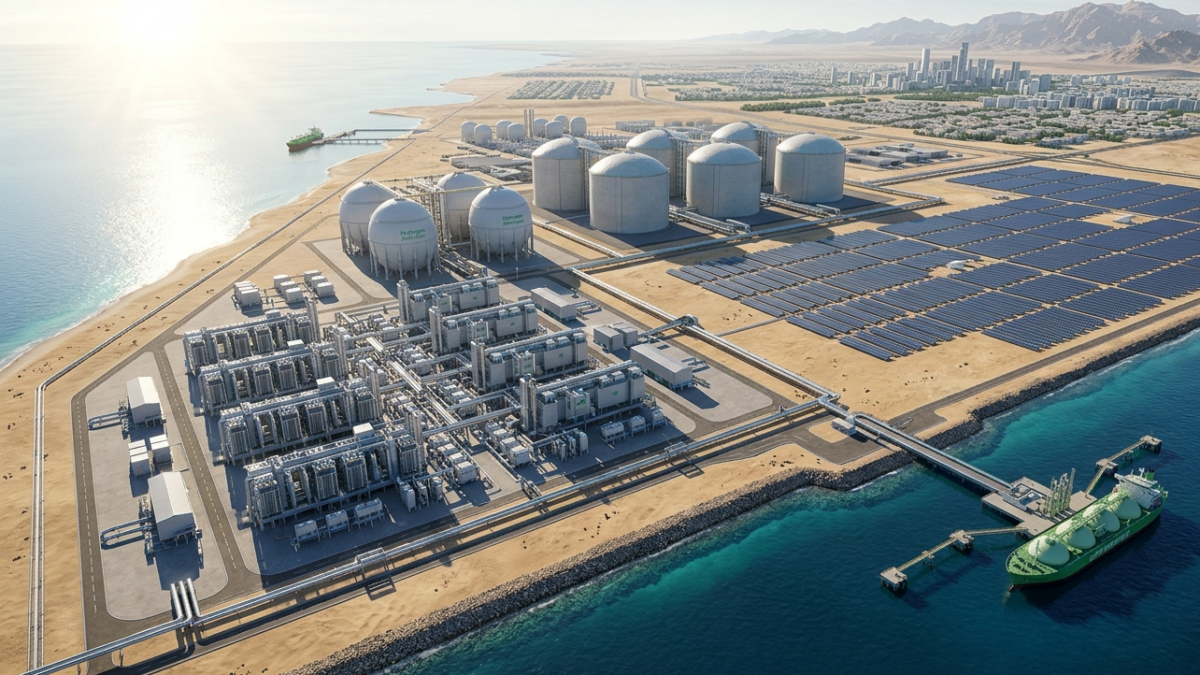
The most concrete operational milestone unveiled during the summit was the formalization of a Joint Development Agreement (JDA) between ACWA Power and Germany’s EnBW for the primary phase of the highly anticipated Yanbu Green Hydrogen Hub. Scheduled to achieve commercial operations by 2030, the facility will operate as a fully synchronized, integrated production and export asset.
| Hub Component | Functional Scope & Technology |
|---|---|
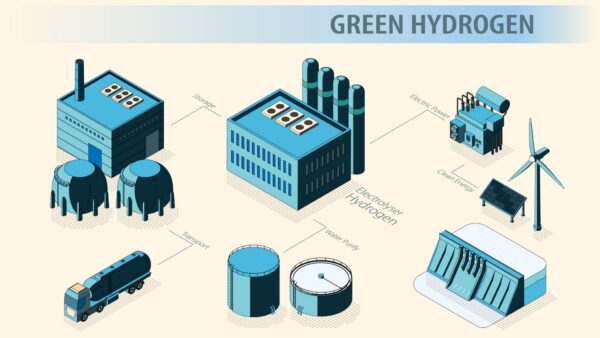
| Generation & Sourcing | Dedicated utility-scale solar PV and onshore wind arrays. |
| Industrial Inputs | Integrated sea-water desalination plants for pure water feedstock. |
| Processing Core | Gigawatt-scale water electrolysis systems and synthetic ammonia conversion lines. |
| Logistics Base | Custom-built cryogenic liquid ammonia and gaseous hydrogen maritime export terminals. |
By capturing the Kingdom’s optimal solar irradiance, steady wind profiles, and highly optimized levelized cost of hydrogen (LCOH), the Yanbu installation will directly address Europe’s pressing industrial decarbonization mandates. For enterprise leaders in the GCC, these capital-intensive allocations reinforce the message that the economic diversification targets of clean energy are rapidly morphing into operational, multi-billion-dollar trade realities.