King Salman Royal Reserve Reports Major Biodiversity Milestone with 241 Plant Species
The King Salman bin Abdulaziz Royal Reserve Development Authority (KSRNR) has announced a significant breakthrough in ecosystem recovery, with vegetation cover and species diversity reaching new heights. According to a recent report from the Saudi Press Agency, the reserve’s rigorous regulatory and protection efforts have directly facilitated a rapid resurgence of local flora.
Executive Summary
- Biodiversity Surge: Recorded plant species increased from 197 in 2024 to 241 in 2025.
- New Discoveries: 44 newly documented plant species were identified within a single year.
- Regional Scale: At 130,700 sq. km, the reserve is the largest terrestrial nature reserve in the Middle East.
- Strategic Alignment: These results directly support the Saudi Green Initiative (SGI) and Vision 2030 sustainability mandates.
A Landmark for Middle Eastern Conservation
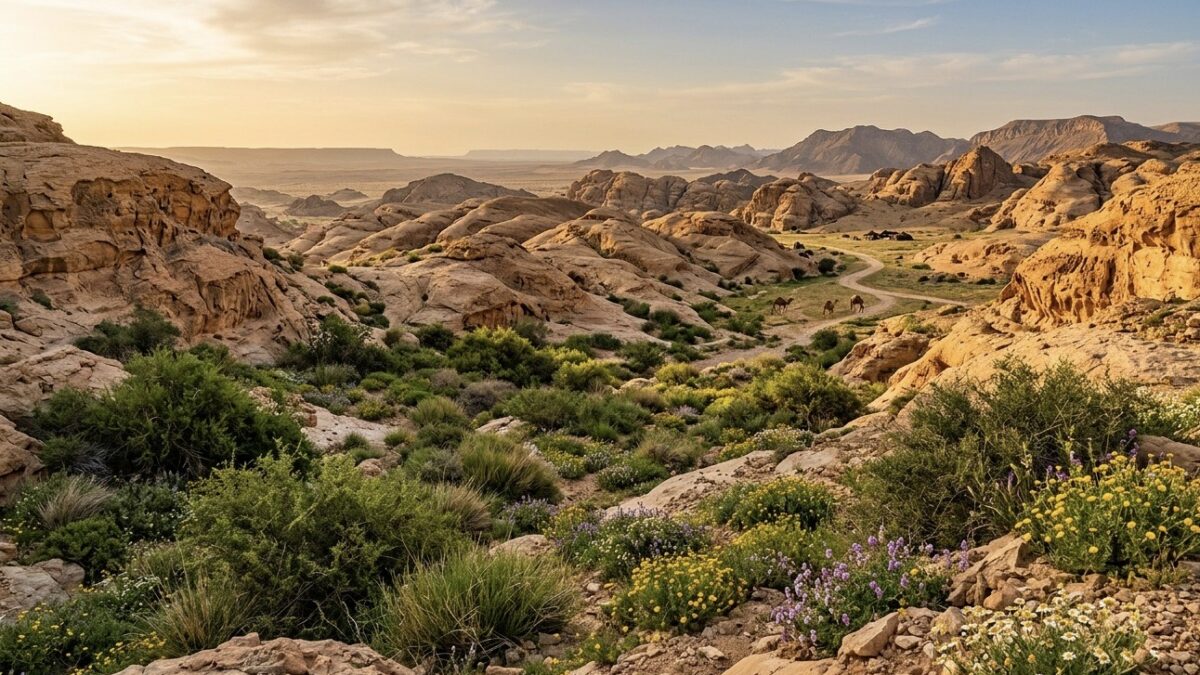
The KSRNR spans a massive territory across Jouf, Hail, the Northern Borders, and Tabuk. Its diverse habitats and varied terrain serve as a critical laboratory for desert restoration. The leap from 197 to 241 registered species in just 12 months underscores the effectiveness of the authority’s “protection-first” strategy, which limits human encroachment and allows for natural seed bank regeneration.
By documenting 44 new species previously unrecorded in the area, the Authority is not only restoring the landscape but also expanding the scientific understanding of the Arabian Peninsula’s unique botanical heritage. This recovery is a vital component of the Kingdom’s broader mission to restore degraded ecosystems and provide a stable habitat for local wildlife.
Driving the Saudi Green Initiative (SGI)
The successful revitalization of the King Salman Royal Reserve is a tangible win for the Saudi Green Initiative. As the Kingdom aims to plant 10 billion trees and protect 30% of its land and sea territory, the KSRNR serves as the flagship for large-scale terrestrial conservation. The restoration of vegetation cover is a primary defense against desertification, helping to stabilize soil and capture carbon in line with national digital transformation goals for the environment.
The Path to 2030: Sustainability and Heritage
Beyond environmental metrics, the resurgence of the reserve enhances Saudi Arabia’s potential for sustainable eco-tourism. By preserving the natural beauty and biodiversity of the North, the Kingdom is creating a world-class destination that honors its natural heritage while contributing to the diversification of the national economy. The Authority remains committed to advancing these sustainability efforts, ensuring that the largest reserve in the Middle East remains a thriving sanctuary for generations to come.