National Sustainability: NGOs Spearhead Circular Economy Solutions at Saudi Environment Week
As the Kingdom accelerates its journey toward the Saudi Green Initiative (SGI) targets, the 2026 edition of Saudi Environment Week has emerged as a critical showcase for grassroots innovation. In Riyadh, non-governmental organizations (NGOs) are demonstrating that the transition to a sustainable future is not merely a policy directive from the top, but a practical, tech-driven movement led by local community champions.
Executive Summary
- Circular Economy Focus: NGOs are pivoting toward surplus food preservation and electronic waste (e-waste) refurbishment to minimize landfill reliance.
- Combatting Desertification: Innovative “Saudi-made” deep-soil irrigation techniques are ensuring high survival rates for native flora in arid dune environments.
- Digital Preservation: E-waste initiatives like Ertiqa are bridging the digital divide by refurbishing hardware for schools and non-profits.
- Strategic Alignment: These initiatives directly support Vision 2030’s goals for environmental protection and the enhancement of the non-profit sector’s GDP contribution.
From Waste to Wealth: The Rise of Food and Tech Circularity
A primary highlight of the week is the Food Preservation Charity’s “Blessing and Preservation” program. By utilizing ISO-certified safety standards and engaging digital content, the organization is transforming how the next generation perceives consumption. Beyond education, the charity has established industrial-scale partnerships to process surplus materials, such as converting used oils and bread into raw materials for secondary industries.
Parallel to food security, the Ertiqa Association is tackling the growing challenge of digital waste. Since its inception in 2014, Ertiqa has functioned as a cornerstone of the Kingdom’s Clean Energy and sustainability ecosystem. By refurbishing computers and partnering with the Al-Qaryan Group for raw material recovery, the association ensures that obsolete tech fuels local manufacturing rather than environmental degradation.
Deep Tech for the Desert: Innovation in Vegetation Cover
Addressing the critical challenge of land degradation, the Dawadmi Association for the Preservation of Trees and Parks has launched a strategic seed bank. This initiative focuses on the genetic preservation of native species threatened by extinction, utilizing temperature-controlled storage technology to extend seed viability in the GCC’s harsh climate.
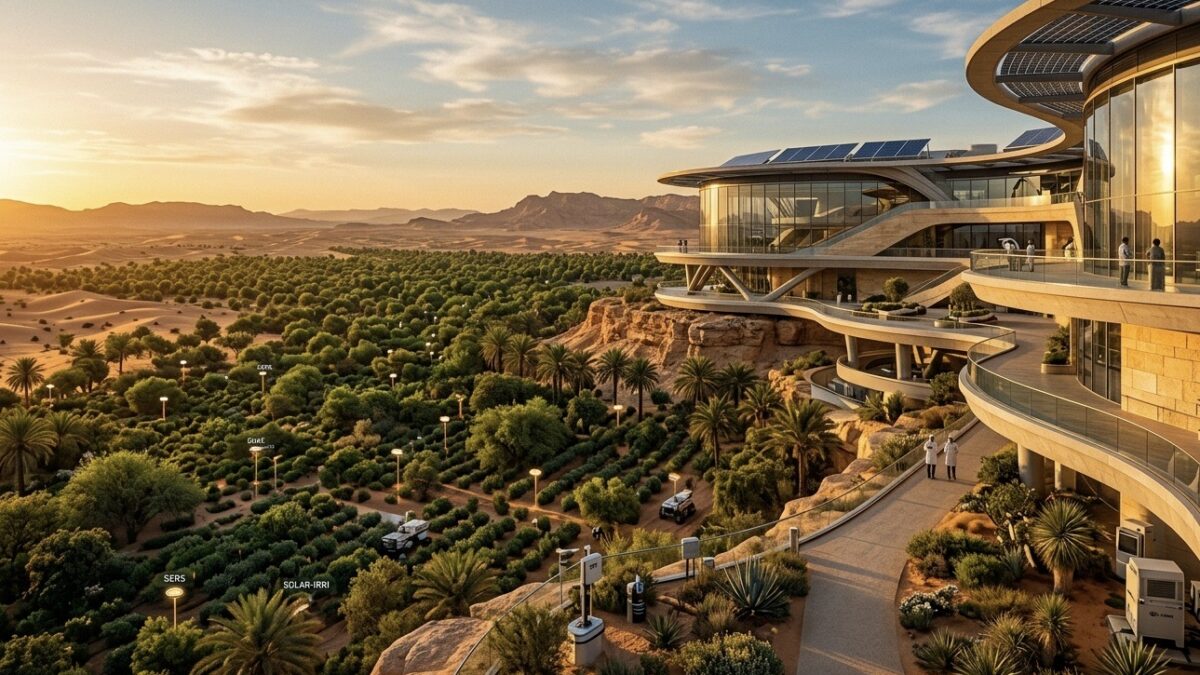
Furthermore, the Wasm Environmental Association is debuting its proprietary “We Made It Saudi” irrigation technology. This “water injection” method delivers moisture three meters deep into sandy soil, creating a subterranean reservoir that allows native Arta trees to survive the peak summer months without constant external irrigation. This localized tech solution represents a significant breakthrough for large-scale afforestation projects across the Arabian Peninsula.
The Institutional Role in Vision 2030
Saudi Environment Week (May 3–9, 2026) serves as more than an awareness campaign; it is a collaborative platform where the private sector, government entities, and NGOs align their ESG (Environmental, Social, and Governance) strategies. By fostering a “Saudi-first” approach to environmental technology, these organizations are securing the Kingdom’s ecological legacy while building a robust, sustainable economy.