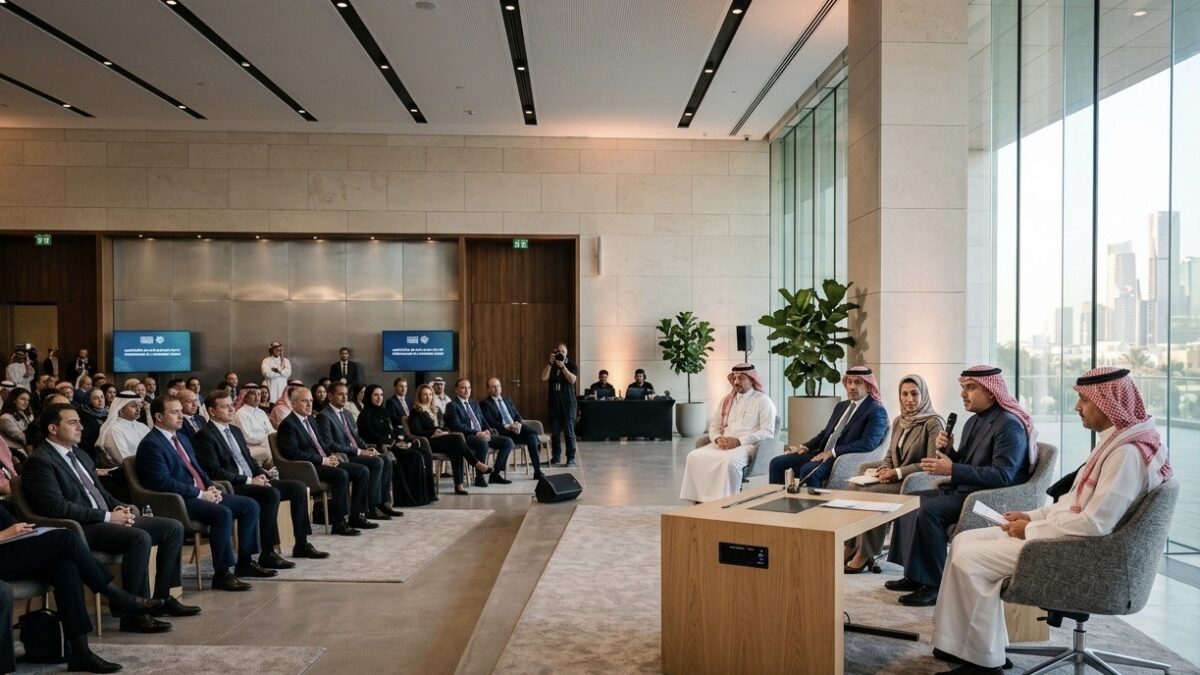
Riyadh Symposium Outlines Saudi Arabia’s Strategic Approach to Universal Human Rights and National Values
At a high-level symposium hosted by the Prince Saud Al-Faisal Institute for Diplomatic Studies in Riyadh, experts and government officials detailed the Kingdom’s evolving framework for human rights. The discourse emphasized a shift from defensive posturing toward the establishment of a proactive, results-oriented “Saudi Model” that harmonizes international standards with the Kingdom’s unique cultural and religious identity.
Executive Summary
- Strategic Shift: Transitioning from responding to international criticism to building a proactive model based on data and tangible outcomes.
- Humanitarian Leadership: KSrelief’s non-discriminatory aid model in Yemen, Gaza, and Sudan is recognized by the UN as a benchmark for rapid response.
- Vision 2030 Integration: Human rights discourse is now a core component of national development, focusing on dignity, justice, and realistic implementation.
- Universal vs. Local: Officials argue that national specificity is the practical framework through which universal human rights principles are realized.
Dr. Samer Al-Jutaili, spokesperson for the King Salman Humanitarian Aid and Relief Center (KSrelief), highlighted that the Kingdom’s humanitarian work is grounded in the principle of non-discrimination. By prioritizing humanitarian need above race or religion, Saudi Arabia utilizes aid as a tool for promoting global stability and tolerance—a practical application of the tolerant values of Islam.
The “Saudi Model”: Interpretation and Implementation
A recurring theme at the symposium was the distinction between universal principles and their implementation. Foza Almehaid, Director of the Human Rights Department at the Ministry of Foreign Affairs, noted that while dignity is a universal core, the framework for implementation must reflect national realities to be effective. Under Vision 2030, the Kingdom aims to demonstrate that universality becomes meaningful only when translated into practical, national contexts.
Mohammed Althaly, Deputy for International Cooperation at the Human Rights Commission, further clarified that locality and universality are not contradictory. Instead, national particularities serve as the mechanism to embed global values like justice into local legal frameworks. He cautioned against using cultural specificities to retreat from international commitments, advocating instead for a disciplined application of international frameworks to counter the politicization of human rights.
Building Global Credibility Through Data
The symposium concluded with an emphasis on the importance of dialogue and incremental reform. By presenting a model validated through results and hard data, Saudi Arabia seeks to correct international perceptions and contribute actively to the global conversation on sustaining human rights. This approach reflects a broader mandate to ensure that human rights advancements are sustainable, culturally resonant, and aligned with the Kingdom’s comprehensive development goals.