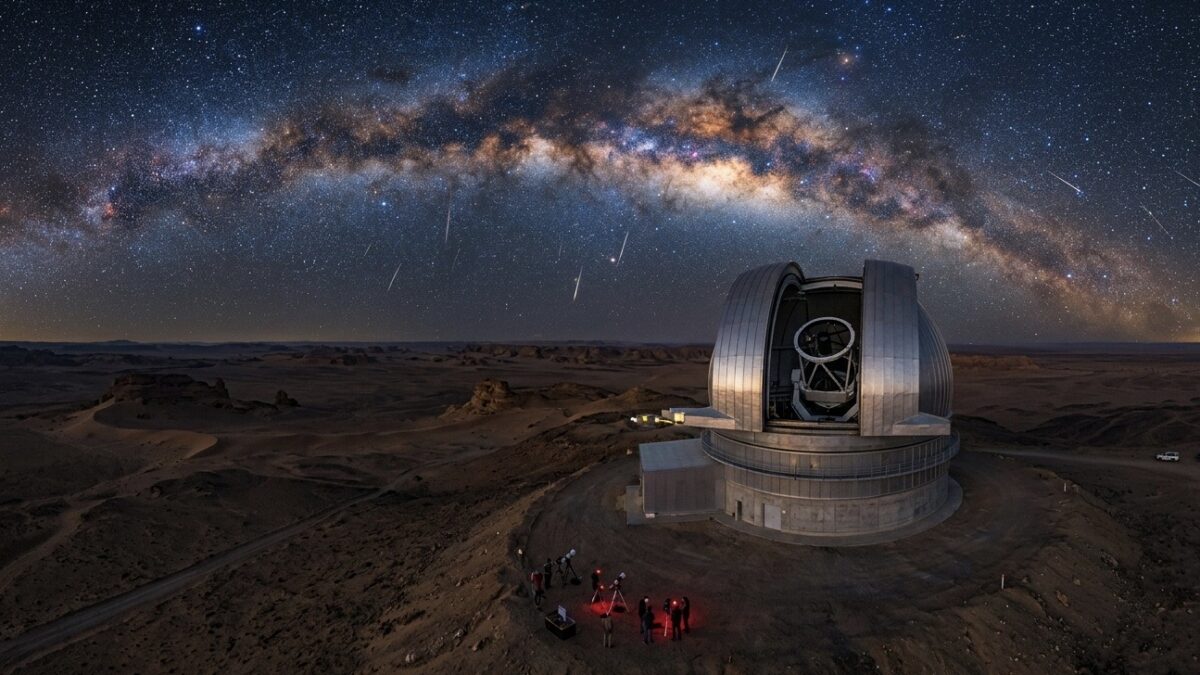
Celestial Frontiers: Imam Turki bin Abdullah Royal Reserve Hosts 10 Major Astronomical Events
The night skies over the Imam Turki bin Abdullah Royal Reserve (ITBA) have become a focal point for regional researchers and nature enthusiasts this month. Throughout May 2026, the reserve is witnessing a sequence of 10 distinct astronomical phenomena, further cementing its reputation as a premier destination for dark-sky preservation and scientific observation within the Kingdom.
Executive Summary
Event Frequency: A total of 10 diverse cosmic events are scheduled across the month of May.
Key Spectacles: Highlights include the Eta Aquarids meteor shower and multiple planetary conjunctions involving Venus and Jupiter.
Strategic Value: These events highlight the reserve’s environmental richness and its potential as a hub for astro-tourism and astronomical research.
Natural Heritage: The sightings underscore Saudi Arabia’s commitment to preserving pristine natural environments under Vision 2030.
A Calendar of Cosmic Significance
The month began with a full moon on May 1, followed shortly by a conjunction with the star Antares on May 4. One of the primary highlights for researchers was the Eta Aquarids meteor shower, which peaked between May 5 and May 8. Following the new moon on May 16, the latter half of the month will feature high-visibility conjunctions with Venus (May 19) and Jupiter (May 20).
As the month progresses, the lunar cycle continues to offer unique observation points, including a simultaneous conjunction with the star Regulus and the first quarter moon on May 23, before concluding with a Spica conjunction on May 27.
The Saudi Lens: Cultivating the Astro-Tourism Economy
While these events are celestial in nature, their impact on the Kingdom’s “Experience Economy” is profound. The ability to witness these phenomena with such clarity is a direct result of the Imam Turki bin Abdullah Royal Reserve’s strict environmental protections. For B2B stakeholders in the tourism and technology sectors, this represents a growing market for specialized observation equipment, eco-tourism infrastructure, and remote sensing technologies.
By positioning these reserves as centers for scientific excellence and natural wonder, Saudi Arabia is diversifying its tourism portfolio, attracting a global demographic of researchers and high-value enthusiasts. This alignment with Vision 2030’s sustainability goals ensures that the Kingdom’s natural assets are leveraged to drive both environmental preservation and economic innovation.
Enjoying this story?
Subscribe free to get the full picture — the Saudi tech digest, weekly.

Written by Sarah Elham
Staff writer covering Saudi Arabia's technology and innovation landscape.