Geopolitical Soft Power: Foreign Policy Magazine Hosts Muslim World League Chief for Strategic Washington Dialogue
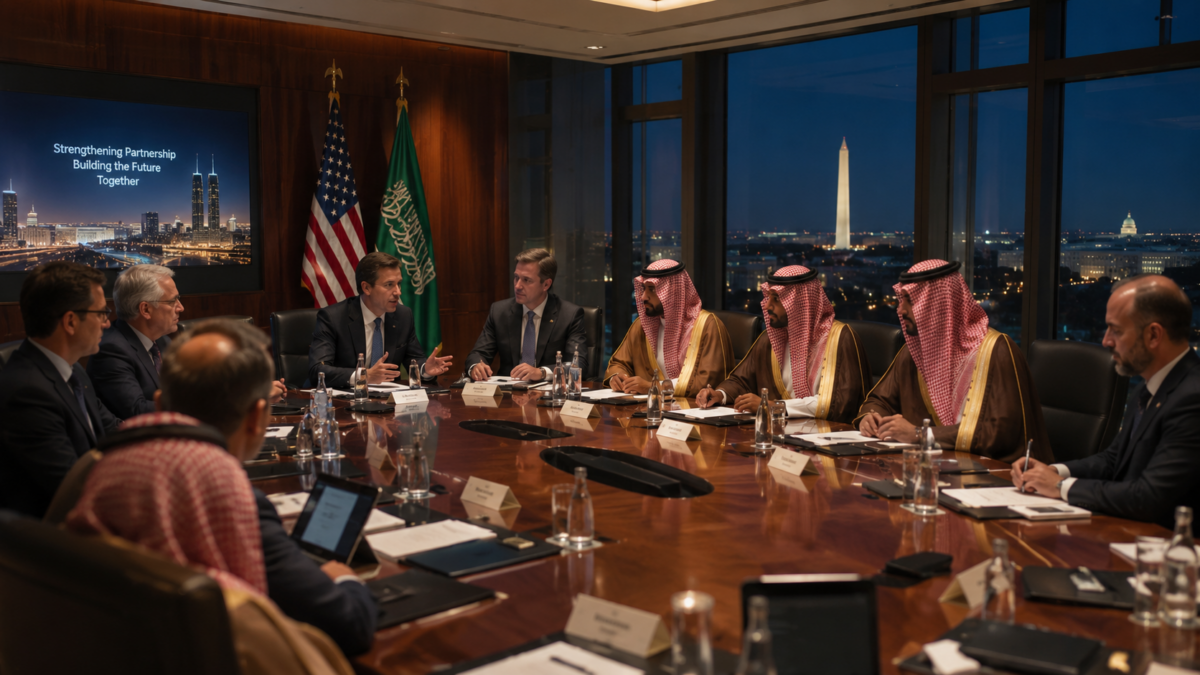
In a high-level diplomatic engagement emphasizing Saudi Arabia’s expanding global ideological leadership, the prominent global affairs publication Foreign Policy hosted His Excellency Sheikh Dr. Mohammed bin Abdulkarim Al-Issa, Secretary-General of the Muslim World League (MWL) and Chairman of the Organization of Muslim Scholars, for an exclusive roundtable session in Washington, D.C. The strategic dialogue convened top-tier international editorial leaders, chief diplomatic analysts, and global policy stakeholders to evaluate cross-border governance, moderation frameworks, and international conflict resolution initiatives.
Executive Summary
- Strategic Diplomatic Hub: The Muslim World League partnered with Foreign Policy magazine to deliver a targeted geopolitical address to Washington’s political and media elite.
- The Charter of Makkah: Discussions centered on scaling the 2019 global accord, which establishes constitutional principles of coexistence, institutional moderation, and systemic counter-extremism.
- Multilateral Adoption: Supported by the Organization of Islamic Cooperation (OIC), the document is being systematically integrated into international cultural, legal, and educational ministries.
- Soft Power Alignment: The engagement underscores the Kingdom’s active deployment of cultural diplomacy as a core foundation for stabilizing international relations and promoting regional security.
The closed-door session, followed by an official state dinner, allowed Dr. Al-Issa to outline the scalable implementation of the landmark Charter of Makkah (Makkah Document). Endorsed initially in 2019 by a consensus of more than 1,200 prominent Islamic scholars and muftis, the framework has evolved from a pan-Islamic declaration into an active operational model for public sector institutions, guiding global ministries in retraining religious leaders and implementing modern, diversity-driven institutional curriculums.
The Saudi Perspective: Amplifying Cultural Diplomacy and Geopolitical Stability Under Vision 2030
For C-suite executives, global risk analysts, and enterprise leaders operating within the GCC, this strategic diplomatic outreach highlights a crucial element of the Kingdom’s overarching roadmap: the economic goals of Saudi Vision 2030 rely on absolute geopolitical stability and strong cross-border partnerships. By systematically projecting its vision of moderate Islam, multi-faith collaboration, and zero-tolerance policy against extremism onto the global stage, Saudi Arabia is solidifying its status as an indispensable anchor for regional trade, innovation, and direct foreign investment.
The operational scaling of the Charter of Makkah matches the Kingdom’s domestic modernization plans. As Saudi Arabia transforms into a global technology hub, logistics corridor, and tourism epicenter, establishing clear frameworks for international coexistence helps mitigate geopolitical risks for international businesses. Furthermore, the systematic backing of the document by the Organization of Islamic Cooperation (OIC) establishes a predictable, secure cultural landscape across major trade-partner nations. Through the active deployment of cultural diplomacy and institutional GovTech tracking frameworks, the Kingdom continues to build a stable, highly collaborative global environment that underpins secure capital investment and cross-border innovation.