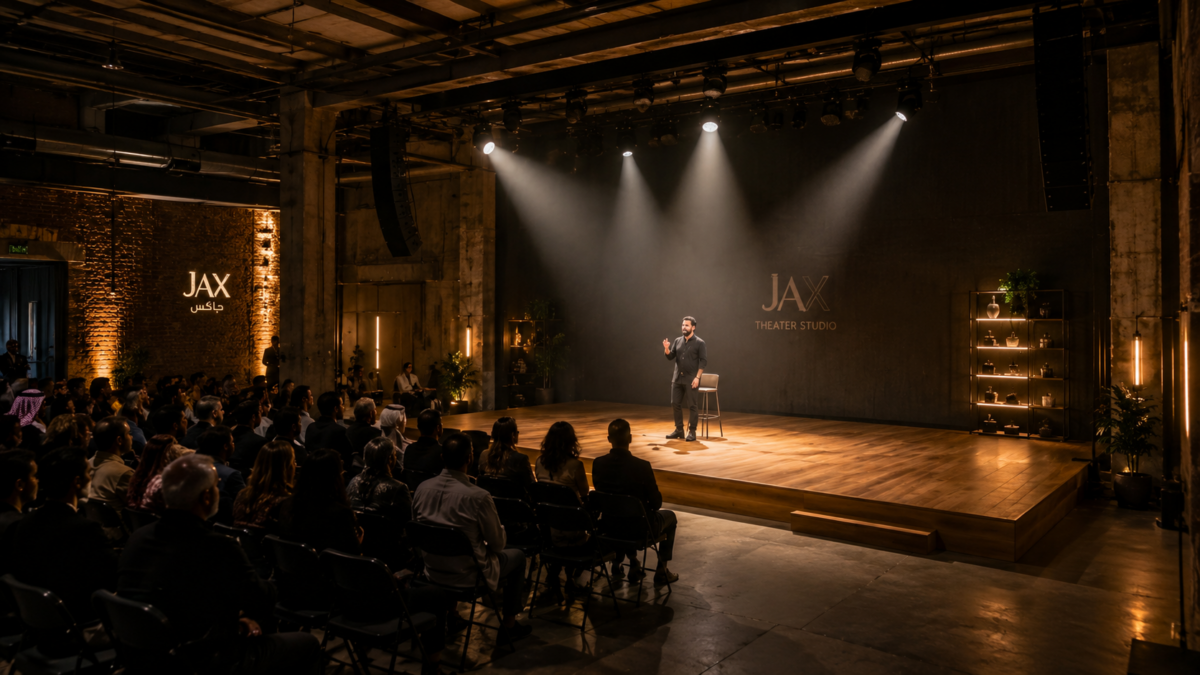
The cultural infrastructure of the Kingdom’s capital achieved a new milestone as the JAX District in Diriyah hosted the debut of “Unspoken,” a collaborative theatrical monologue series. Produced through a strategic cross-industry partnership between local creative community Writers in Riyadh, Aurora Theater, and The Warehouse, the production merges performance art, literature, and live music. The initiative highlights the rapid institutionalization and commercial viability of the Saudi creative industries under the structural umbrella of Vision 2030.
Executive Summary
- Cross-Industry Collaboration: Strategic partnership blending localized screenwriting, international theater production, and creative venue management.
- Socio-Cultural Scaling: Writers in Riyadh reports community growth from 15 foundational members to over 600 active creative professionals.
- Infrastructure Activation: Utilization of the JAX District as an incubator for high-throughput, contemporary media, and performance assets.
- Economic Footprint: Micro-case study showing the rising demand for homegrown entertainment concepts and experiential creative economies.
The Architecture of an Expanding Creative Economy
The staging of “Unspoken: Episode 1 — Permission Not Granted” marks a structural shift from informal artistic gatherings to organized, multi-disciplinary productions within Riyadh’s dedicated creative zones. By weaving nine distinct, unfiltered human monologues alongside tailored musical interludes, the production demonstrates a sophisticated approach to localized storytelling. The event utilized talent from varied international and domestic backgrounds, highlighting Riyadh’s growing status as an attractive hub for regional media professionals.
The JAX District—originally a complex of industrial warehouses transformed by the Ministry of Culture—serves as the physical infrastructure enabling these creative ecosystems to scale. By providing plug-and-play venues like The Warehouse, the district lowers the barrier to entry for independent production companies, allowing local creators to test market viability and engage directly with corporate and public audiences.
Community-Led Cultivation and Global Methodology Transfer
A driving force behind the performance is the integration of international theatrical methodologies with local cultural contexts. Aurora Theater, established in Hong Kong for 15 years before migrating its framework to Saudi Arabia, focuses on building self-sustaining community theater systems. This approach matches the organic growth witnessed by local entities like Writers in Riyadh, which has scaled its network significantly to meet the demands of a talent-hungry market.
The narratives tackled complex, universal themes—ranging from familial dynamics and mental wellness to modern societal shifts—while maintaining precise alignment with regional sensibilities. This balance proves that local creative teams are successfully developing mature narrative structures capable of fostering deep human connections while respecting the operational parameters of the Saudi entertainment ecosystem.
Monetizing Spoken Word: Driving the Vision 2030 Media Landscape
Under the Quality of Life Program—a core pillar of Saudi Vision 2030—the development of local talent and multi-disciplinary art platforms is no longer merely a cultural objective; it is an economic imperative. Independent localized theater productions like “Unspoken” create downstream economic value for media production pipelines, acting as real-world testing grounds for actors, directors, and scriptwriters who will eventually feed the Kingdom’s expanding digital media, television, and film sectors.
As the regulatory landscape continues to support public exhibitions and intellectual property generation, the intersection of community writing groups and established theatrical frameworks provides a sustainable model for future talent pipelines. The commercial success of these pilot projects indicates a healthy consumer appetite for sophisticated, live narrative entertainment within the GCC region.