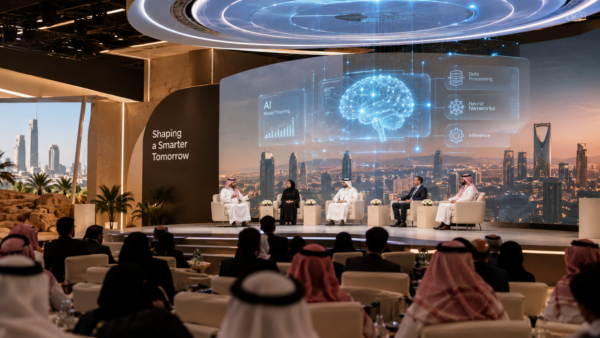
The recruitment landscape within Saudi Arabia is experiencing a significant structural shift as businesses transition rapidly from legacy, degree-focused assessment metrics toward verified, skills-based hiring models. Driven by institutional digital transformation mandates, local enterprises are prioritizing practical capabilities in advanced technologies. According to the comprehensive Micro-Credentials Impact Report published by Coursera, verified expertise in generative artificial intelligence is now the premier differentiator for human capital acquisition across the Kingdom.
Executive Summary
- Hiring Preferences: A staggering 79 percent of Saudi employers now explicitly prefer candidates with verified generative AI skills over more experienced applicants who lack those specific credentials.
- Widespread Adoption: Skills-based hiring has achieved near-total adoption, utilized by 99 percent of regional employers for entry-level recruitment campaigns.
- Fiscal Optimization: Integrating pre-certified candidates allows 72 percent of organizations to project a reduction in internal training overhead exceeding 20 percent.
- Salary Premium: A dominant 98 percent of hiring executives state they are actively prepared to offer higher baseline starting salaries to graduates possessing industry-recognized AI certifications.
This rapid realignment highlights the changing nature of corporate competency requirements. As organizations integrate complex LLMs and automation systems into their core operations, the demand for immediate, execution-ready technical skillsets has outpaced traditional educational timelines. Consequently, corporate leaders are looking to specialized certification programs to bridge the operational capability gap.
Academic Realignment and Student Demographics
The corporate demand for technical agility is directly influencing the educational choices of the rising workforce. The report indicates that 82 percent of Saudi students actively select academic tracks and professional programs that include built-in generative AI certifications. This engagement level sits substantially higher than the documented global average of 62 percent, illustrating the high digital literacy and ambition characteristic of the Kingdom’s young professionals.
Furthermore, corporate confidence in alternative educational certifications remains exceptionally high. Approximately 92 percent of Saudi business executives report that new hires holding specialized micro-credentials demonstrate superior operational performance and faster integration during their opening year of employment compared to traditionally educated peers.
Accelerating Human Capital Under Vision 2030
Kais Zribi, General Manager for the Middle East and Africa at Coursera, emphasizes that building a highly adaptable, skills-based domestic workforce remains completely fundamental to achieving the overarching national objectives of Saudi Vision 2030. Because foundational technology systems iterate at a pace that frequently outruns conventional university curricula, continuous professional upskilling has transformed from a career advantage into an absolute corporate necessity.
This evolving paradigm ensures that future enterprise talent pipelines remain closely synchronized with real-world industry requirements. For organizations seeking to align their human capital development plans with national digital guidelines, keeping pace with updates in AI & deep tech systems is crucial for sustaining a competitive market position.
For a detailed breakdown of the comprehensive labor dataset and localized economic indicators, access the formal analysis hosted on the Arab News Digital Platform.