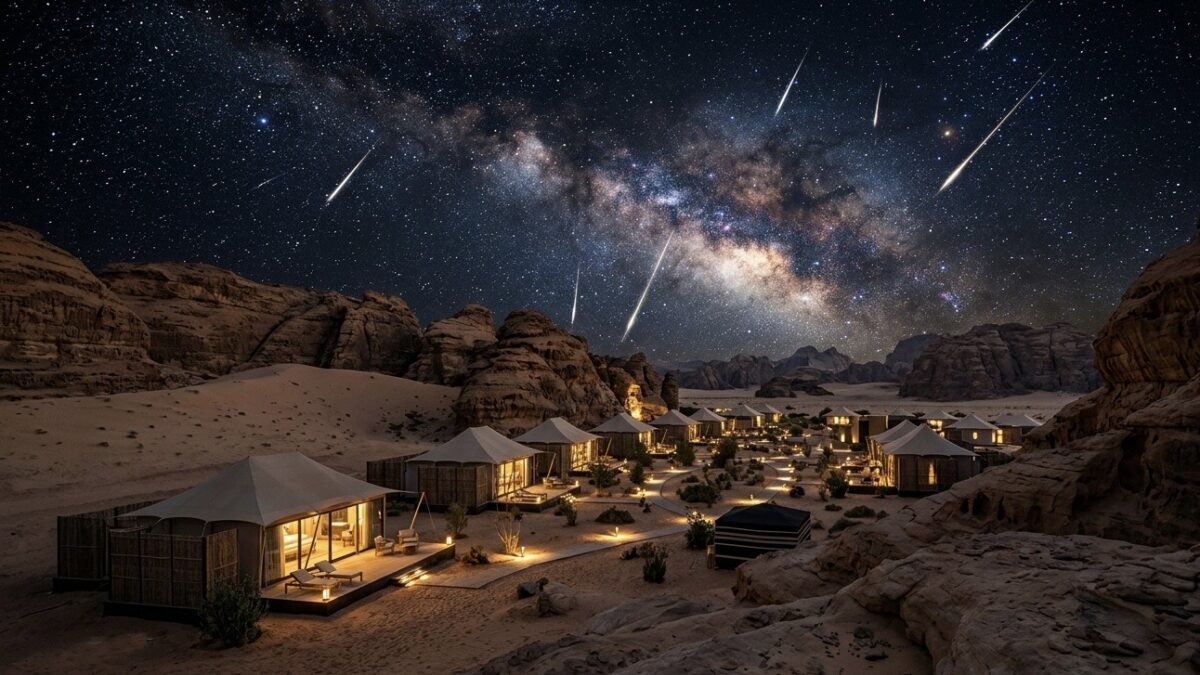
Celestial Spectacle: Lyrid Meteor Shower to Peak Over Saudi Arabia This Wednesday
After a 16-week hiatus in major astronomical activity, stargazers across the Kingdom are preparing for the return of the Lyrid meteor shower. The Noor Astronomical Society has confirmed that the celestial display will reach its zenith over Saudi Arabia and the broader Arab world overnight between Wednesday, April 22, and Thursday, April 23, 2026.
- Peak Timing: Optimal viewing from midnight until the first light of dawn.
- Viewing Conditions: High visibility expected due to the moon setting shortly after midnight.
- Frequency: An average of 15 to 20 meteors per hour, with potential “outbursts” of up to 100.
- Origin: Debris from Comet Thatcher, which only visits our solar system every 415 years.
A 2,700-Year-Old Tradition Reimagined
The Lyrids hold the distinction of being one of the oldest recorded meteor showers in human history, with documentation dating back to 687 B.C. According to Issa Al-Ghafili, President of the Noor Astronomical Society, the meteors are actually dust particles from Comet Thatcher vaporizing upon atmospheric entry at speeds of 50 kilometers per second. This year, the peak coincidentally aligns with Earth Day, serving as a poignant reminder of our planet’s place within a dynamic cosmic ecosystem.
For the best experience, astronomers recommend looking toward the constellation Lyra, specifically near the bright star Vega. No specialized equipment like telescopes or binoculars is required, as the meteors are best viewed with the naked eye to capture their long, glowing trails.
The Saudi Perspective: Astro-Tourism and the Rise of Dark Sky Reserves
The Lyrid meteor shower arrives at a time when Saudi Arabia is aggressively positioning itself as a global leader in “Astro-tourism,” a niche but high-value sector of digital transformation within the tourism industry. Under the framework of Saudi Vision 2030, projects like the Red Sea Global are implementing “Dark Sky” initiatives to eliminate light pollution, making the Kingdom’s vast desert landscapes some of the premier destinations for astronomical observation worldwide.
For B2B stakeholders in the hospitality and tech sectors, this celestial event underscores the growing demand for remote, tech-integrated tourism infrastructure. By leveraging the Kingdom’s natural geographical advantages and clear desert skies, Saudi Arabia is creating a unique value proposition that blends ancient natural wonders with ultra-modern luxury experiences.
Where to Watch
To maximize visibility, residents in Riyadh, Jeddah, and the Eastern Province are encouraged to move toward open desert areas away from urban light centers. Areas near AlUla and the NEOM periphery offer particularly crystalline views, provided weather conditions remain clear.