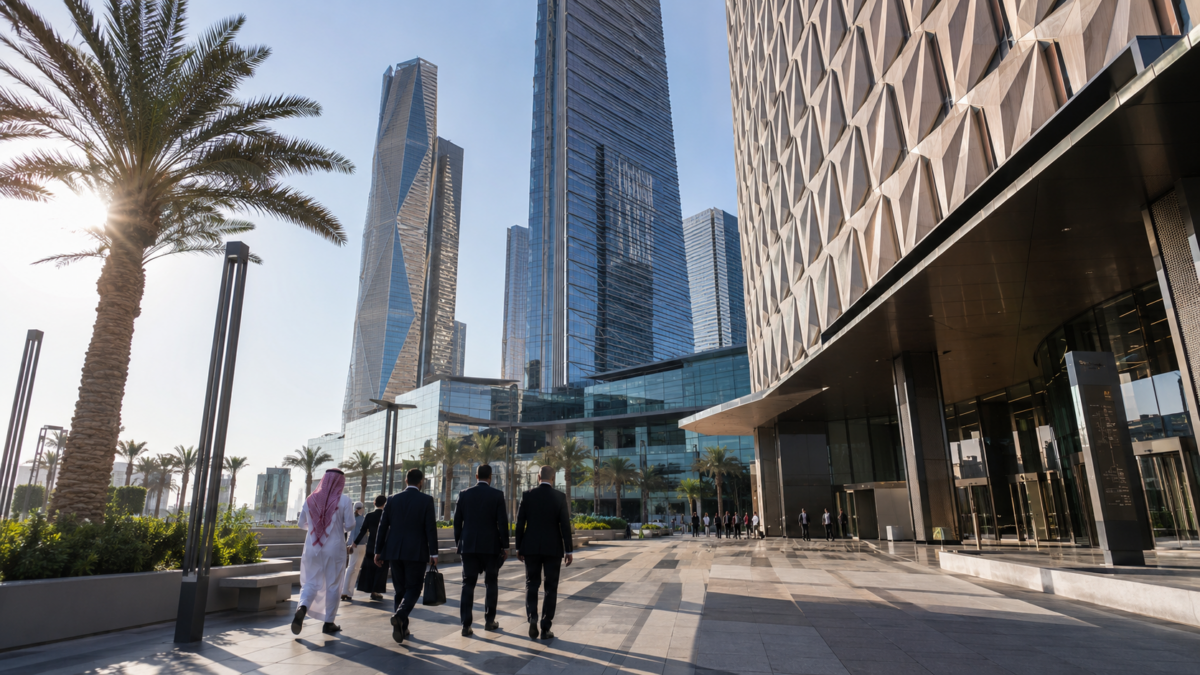
Saudi Arabia’s non-oil economic transformation achieved another quantifiable milestone in the first quarter of 2026, as services exports climbed to SR71.3 billion. According to the latest data released by the General Authority for Statistics (GASTAT), this represents a robust 7.9% increase quarter-on-quarter, serving as explicit verification that the structural economic diversification mandated by Vision 2030 is yielding measurable results.
Executive Summary
- Aggregate Growth: Total services exports surged by 7.9% quarter-on-quarter, reaching an impressive valuation of SR71.3 billion.
- Tourism Domination: Travel services retained their position as the primary economic engine, generating SR44.3 billion and capturing 62% of the aggregate sector market share.
- Trade Balance Improvement: Total services imports decreased by 6.9% to SR111.4 billion, closing the service-sector trade deficit and keeping more capital within the domestic economy.

Deconstructing the Services Matrix: Tourism and Logistics
The exceptional performance of the travel services sector, which accounted for more than three-fifths of total exports, underscores the success of the Kingdom’s aggressive investment in its tourism ecosystem. Expanded international flight routes, streamlined visa technologies, and a packed calendar of global business and entertainment events have turned personal travel into a major export asset, making up 96.6% of all travel exports.
Simultaneously, transportation services emerged as the second-largest segment, contributing SR10.9 billion to the national ledger. Within this category, air transport accounted for 39.9% of exports, while maritime transport made up 40.9% of imports. These balanced figures illustrate Saudi Arabia’s advancing status as a multi-modal logistics hub linking Eurasian trade routes.
The Rising Footprint of Knowledge-Based Sectors
While legacy sectors like travel and transport lead in raw volume, specialized high-value segments are steadily expanding. Communications, computer, information, and government services collectively brought in SR2.6 billion, while independent business services contributed an additional SR2.4 billion. Construction infrastructure exports added a solid SR2 billion to the quarterly total.
This steady growth in knowledge-based exports highlights the vital role of advanced digital ecosystems. By modernizing public sector administration and rolling out robust regional clouds, national GovTech frameworks are helping Saudi enterprise networks export technical, administrative, and engineering services to neighboring GCC markets. Comprehensive data regarding these segment shifts can be cross-examined via the official reports on Saudi Gazette.
Closing the Deficit Through Localized Procurement
On the import side, the 6.9% contraction to SR111.4 billion reflects a broader trend toward domestic self-sufficiency. Though transportation and business services still lead import volumes at SR31.8 billion and SR15.8 billion respectively, the steady drop in foreign service reliance shows that local enterprises are successfully capturing market share inside the Kingdom.
As the initiatives of Vision 2030 continue to mature, the services sector is moving from a supporting role to a primary driver of GDP growth, attracting foreign direct investment and building a highly resilient, knowledge-driven economy.