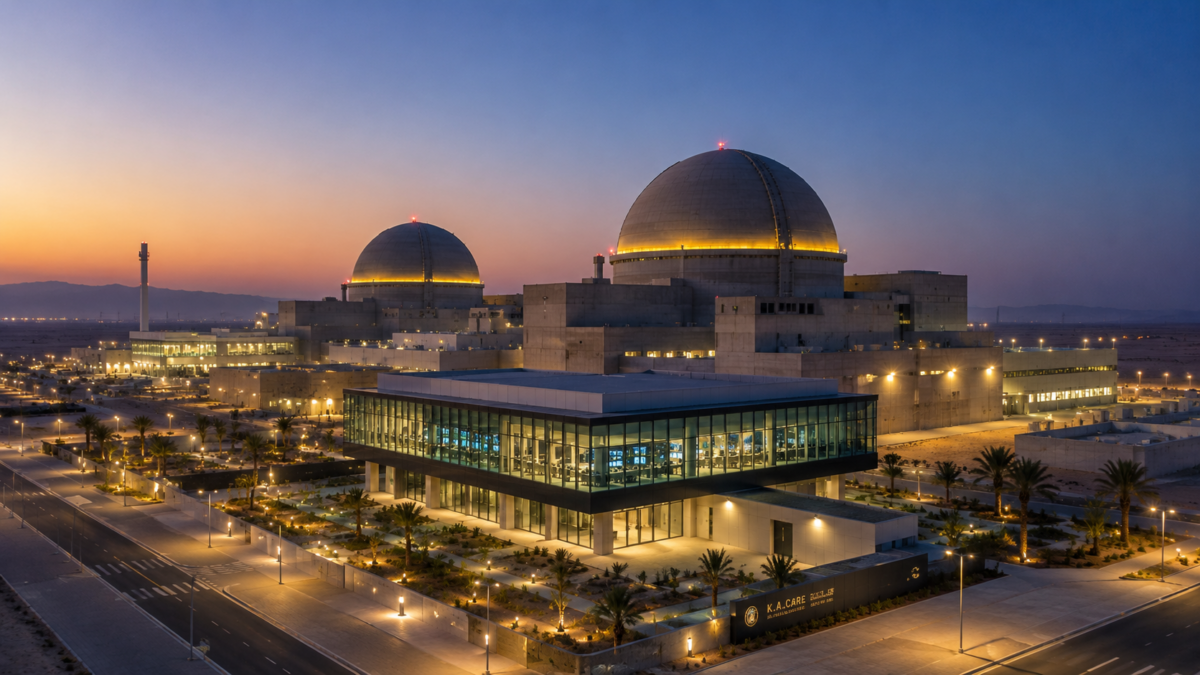
Following the landmark civil nuclear cooperation agreement signed between Saudi Arabia and the United States, global energy analysts and former diplomats have likened the partnership to the founding of Aramco in 1933. The accord establishes a foundational framework for peaceful nuclear energy development within the Kingdom, serving as a pillar for post-fossil-fuel diversification under Vision 2030.
- Generational Milestone: Experts frame the agreement as a multi-decade strategic alignment rather than a transactional contract, reminiscent of early US-Saudi energy cooperation.
- Economic Diversification: Integrates modern nuclear energy into the national grid to preserve domestic hydrocarbons for high-value industrial applications.
- Geopolitical Alignment: Strengthens bilateral technical and non-proliferation ties with Washington while safeguarding the Kingdom’s multi-vendor energy strategy.
A Modern Cornerstone for Vision 2030
The Saudi Ministry of Energy has framed the peaceful nuclear cooperation agreement as a structural evolution of a nine-decade strategic partnership with Washington. Tracing back to the initial 1933 oil concession that gave rise to Saudi Aramco, the agreement reflects diplomatic groundwork executed during Crown Prince Mohammed bin Salman’s engagements with US leadership.
Former US Ambassador to Riyadh Michael Ratney characterized the accord as historic, highlighting that baseload nuclear power represents a direct extension of Saudi Arabia’s broader diversification agenda. By integrating advanced nuclear capabilities, the Kingdom gains a sovereign energy option, preserving oil resources for petrochemical value chains and domestic industrial growth.
Strategic Energy Autonomy and Multi-Vendor Options
While the agreement deepens technical ties with the United States, regional analysts emphasize the Kingdom’s broader sovereign strategy. Saudi commentator Turki Al-Faisal Al-Rasheed noted that while Washington remains a critical technical partner, Saudi Arabia maintains active diversification across key global energy leaders, including France, China, and Russia.
US Energy Secretary Chris Wright commended Saudi leadership for its forward-thinking approach to global market stability. The deal reinforces bilateral commercial trust while keeping future technological expansion open through strict non-proliferation safeguards and mutual framework agreements.
Safeguards, Non-Proliferation, and Regional Stability
The framework operates under international non-proliferation safeguards, ensuring a civil-focused nuclear power initiative. By establishing transparent, regulated nuclear capabilities alongside global partners, Saudi Arabia demonstrates a institutional model for energy expansion in the Middle East.
For enterprise leaders and industrial decision-makers across the GCC, this civil nuclear initiative underscores the fast-tracking of clean baseload power, driving long-term grid stability for gigaprojects and sovereign computing infrastructure.
Explore more on the region’s energy transformation in our dedicated Clean Energy coverage.