From historic gateway to smart hub: How Jeddah’s foundational infrastructure shapes modern Hajj governance
Throughout the modern history of the Kingdom, the port city of Jeddah has served as the primary strategic gate for millions of international pilgrims arriving by sea, air, and land. As baseline volumes scaled upward over the decades, the urban ecosystem faced deep pressures regarding spatial capacity, public health grid stability, and real-time transit logistics. The early state-led solution—the establishment of dedicated Pilgrims Cities under the King Abdulaziz Endowment for Al-Ain Al-Aziziyah—created a foundational operational blueprint that continues to inform modern urban management and mega-scale crowd analytics.
Executive Summary
- Historical Paradigm: Founded across the 1950s, Jeddah’s early Pilgrim Cities pioneered isolated, multi-modal logistics hubs for sea, air, and land arrivals.
- Institutional Evolution: Operational execution has shifted from nominal-fee humanitarian endowments to centralized, data-driven governance led by the Ministry of Hajj and Umrah.
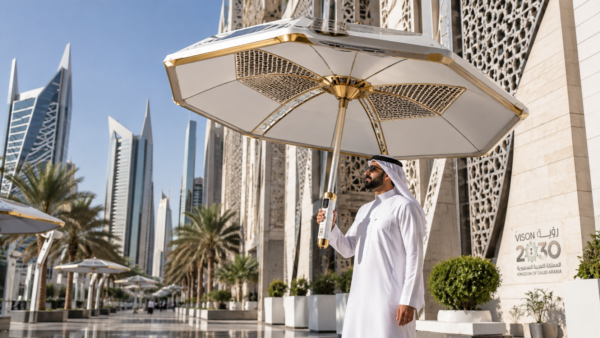
- Vision 2030 Alignment: This legacy architecture directly shapes the Pilgrim Experience Program, which uses smart cities infrastructure to scale annual capacity to 30 million Umrah performers.
The roll-out of targeted residential zones began in 1370 AH (1950-1951 CE) with the Sea Pilgrims City, followed rapidly by specialized African and Air Pilgrim hubs. Strategically placed near primary entry points, these facilities provided integrated utilities, clear transport links, and structured accommodation designed to prevent informal urban sprawl and optimize processing pipelines. This historically validated approach to zoning acts as the precursor to today’s highly automated transport corridors connecting Jeddah, Makkah, and Madinah.
The Saudi Perspective: Amplifying Vision 2030 and digital crowd management
For enterprise technology leaders and municipal stakeholders across the GCC, the historical development of Jeddah’s arrival infrastructure is a clear case study in large-scale operations. Under Saudi Vision 2030, the Pilgrim Experience Program has transformed these early models of physical zoning into highly synchronized, cloud-managed municipal networks. The operational goal has changed from providing static shelter to engineering seamless, high-throughput passenger experiences.
Today, the legacy of the King Abdulaziz Endowment for Al-Ain Al-Aziziyah has transitioned from primary housing management into a highly targeted role focused on logistics, regional water network distribution, and cross-institutional fieldwork. Centralized state entities now manage live data streams to orchestrate mass arrivals. The integration of smart infrastructure across Jeddah’s entry points includes key developments such as:
1. Automated crowd management (Tafweej) platforms
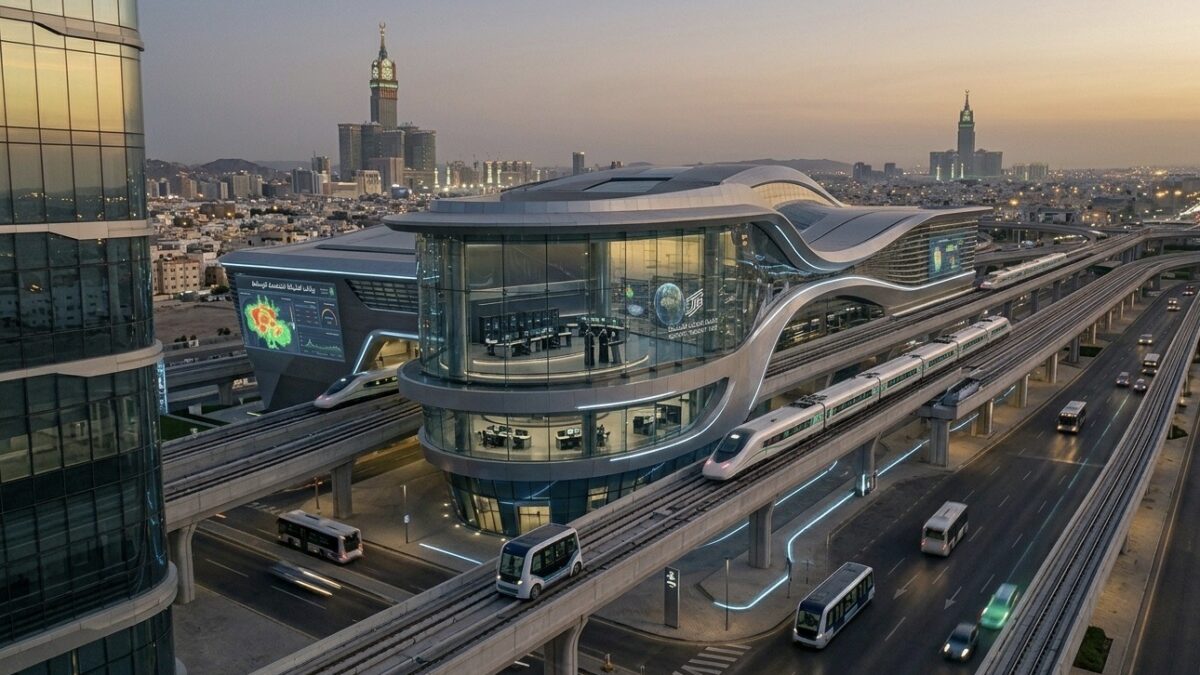
The early, manual transport schedules used by the Pilgrim Cities have been replaced by centralized digital command structures. The Ministry of Hajj and Umrah, coordinating with transport and security authorities, uses predictive traffic-flow modeling to safely distribute arrivals across regional rail and road networks, balancing the load between Makkah and Jeddah.
2. Biometric and smart border logistics
Modernizing the dedicated points of entry first established by the early Air and Sea Pilgrim Cities, modern infrastructure integrates advanced biometric verification and automated passport tracking. These investments drop processing times significantly, keeping transit terminals clear even during peak seasonal flows.
3. Sustainable utility and resource planning
Reflecting the endowment’s early focus on public hygiene and reliable water infrastructure, modern smart city frameworks incorporate IoT-enabled grid tracking. Real-time monitoring across water distribution lines ensures resource stability throughout peak demand cycles, protecting urban sustainability across the Western Province.
Jeddah’s journey from a tactical transit gateway into a tech-driven logistics hub highlights the Kingdom’s long-standing focus on visitor welfare and scalable infrastructure. By fusing historic spatial strategies with modern edge computing and automated transit networks, Saudi Arabia continues to establish international benchmarks for mega-event logistics and smart municipal management.