Beyond Earth: Saudi Arabia Solidifies Global Standing in NASA’s Artemis II Mission
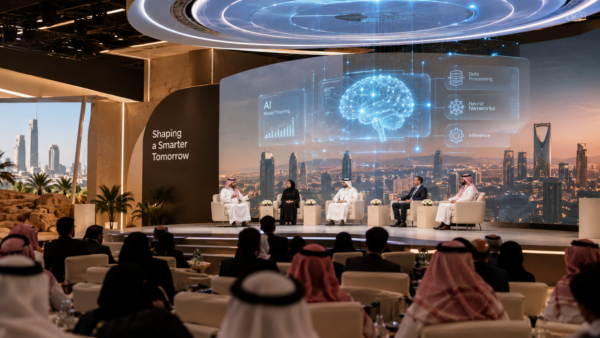
The Saudi Space Agency has marked a historic milestone in international cosmic collaboration, as detailed in a recent high-level seminar organized by Makkah’s education authority. Attended by over 1,000 participants and led by elite faculty from King Abdulaziz University, the session highlighted the Kingdom’s technical contributions to NASA’s Artemis II mission—the first crewed spacecraft to circle the moon in over half a century.
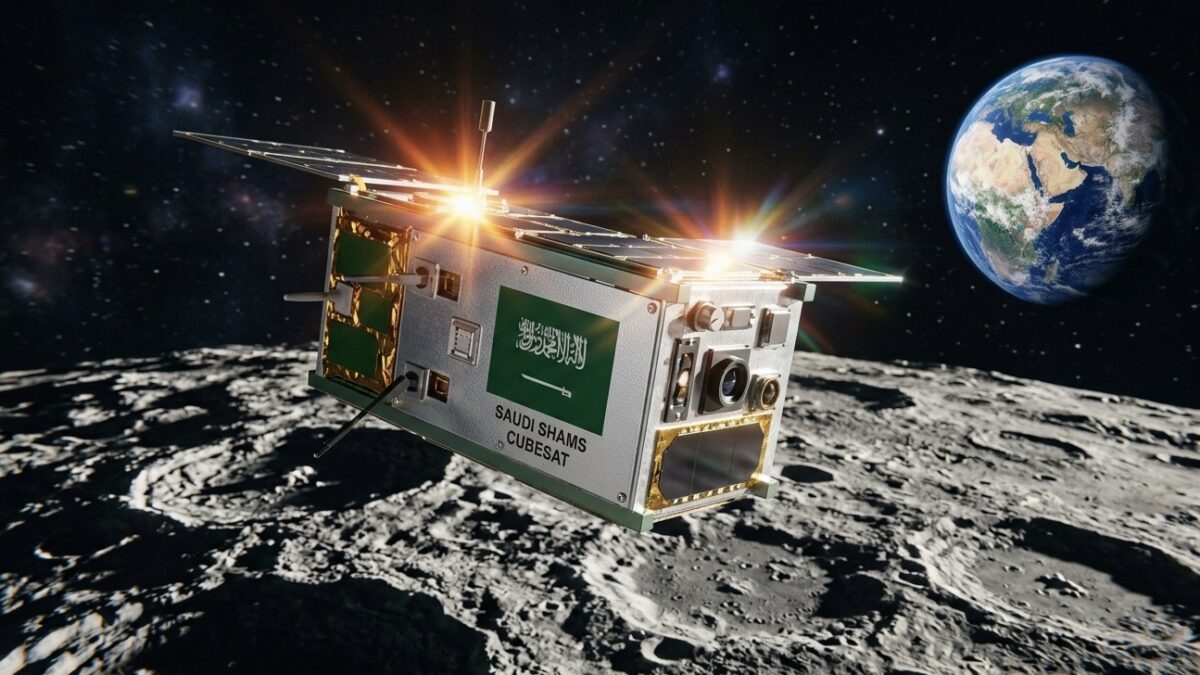
- Technological Achievement: Deployment of the Saudi-developed ‘Shams’ CubeSat on the lunar trajectory.
- Scientific Research: Supporting global data collection on space weather and solar radiation.
- Biomedical Innovation: Integration of Saudi research on spaceflight’s impact on human disease.
- Vision 2030 Alignment: Rapidly expanding national capabilities in the sovereign space and deep tech sectors.
Shams Satellite: Sovereign Tech in Deep Space
A central focus of the mission is the Shams satellite, a sophisticated CubeSat engineered by the Saudi Space Agency. Traveling alongside NASA’s astronauts, Shams is designed to monitor solar radiation and its effects on space systems. This contribution is critical for the long-term sustainability of human life in space, providing essential data for both the NASA-led Artemis program and future sovereign Saudi missions.
Dr. Ayed Sulaiman Al-Rahili and Dr. Samira Al-Harbi emphasized that the development of Shams is not merely a symbolic gesture but a demonstration of the Kingdom’s advanced manufacturing and engineering prowess in the high-stakes environment of lunar exploration.
The Saudi Perspective: Leading the Arab World’s Space Renaissance
The Kingdom’s involvement in Artemis II is a definitive proof-point for digital transformation within the deep tech sector. While global headlines focus on the return to the moon, the “Saudi Lens” reveals a strategic move toward becoming a regional hub for space-based scientific research. The publication of Saudi astronaut Rayyanah Barnawi’s medical research in Science Advances earlier this year underscores that the Kingdom is now a producer—not just a consumer—of critical aerospace intelligence.
For GCC enterprise leaders, the expansion into the space sector represents a burgeoning B2B ecosystem. From high-speed satellite communications to terrestrial data centers that process cosmic telemetry, the space industry is becoming a primary driver for the Saudi economy’s transition away from hydrocarbon reliance.
Empowering the Next Generation of Engineers
The seminar concluded with a directive to empower Saudi students in STEM fields. By integrating lunar-tier technology into local educational frameworks, the Kingdom is ensuring that the workforce of 2030 is equipped to lead the next generation of “sovereign compute” and robotics in orbit. Saudi Arabia is no longer just watching the stars; it is actively shaping the technology required to reach them.