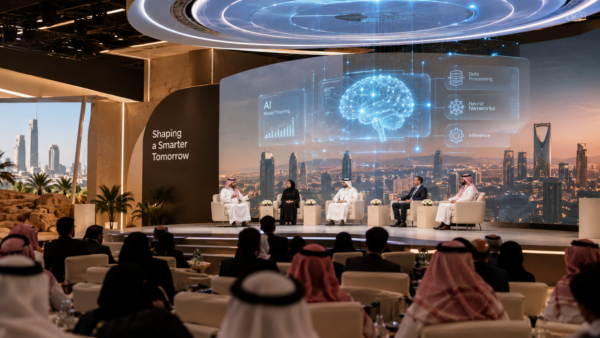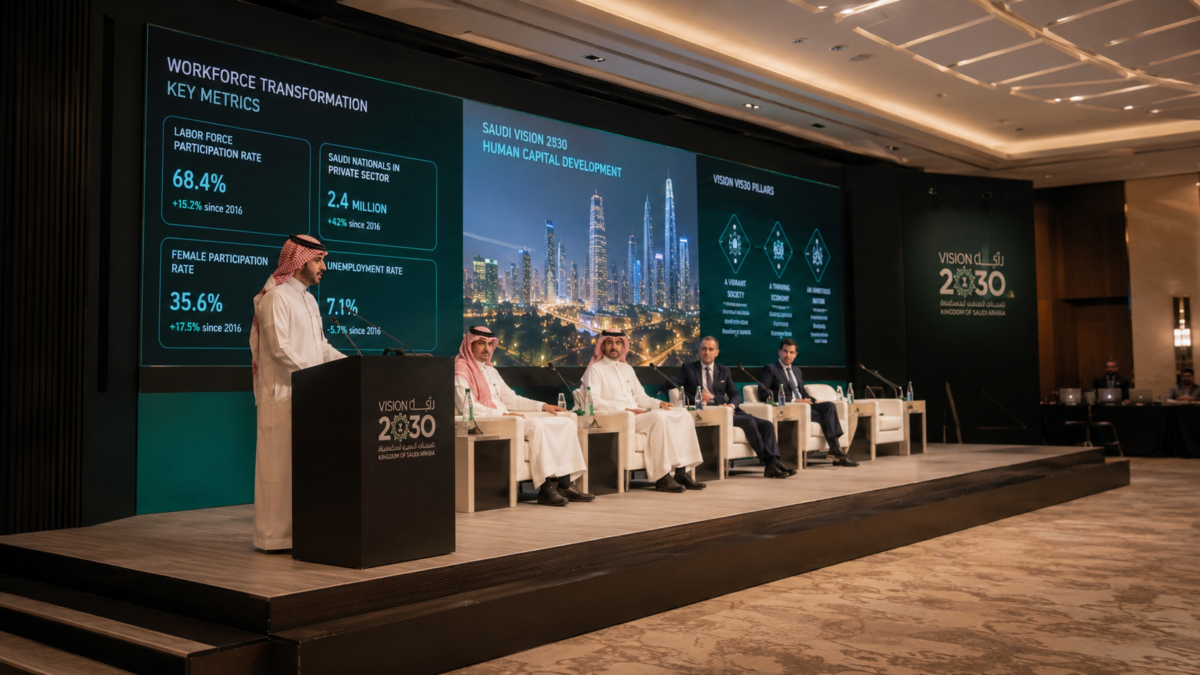
Saudi Arabia is fundamentally altering its economic fabric by driving responsible, human-centered artificial intelligence into the core of its national strategy. At home and on the global stage, the Kingdom is demonstrating that AI adoption in Saudi Arabia is not merely about automation, but about augmenting human capability, optimizing workforce development, and ensuring the seamless execution of massive giga-projects. From international labor forums in Geneva to the rapidly evolving construction sites across the region, intelligent systems are being positioned as the primary catalyst for achieving Vision 2030 objectives.
Key Insight: Technology alone does not define the future of work. The true metric of success lies in leveraging artificial intelligence to protect workers, elevate skills, and eliminate operational bottlenecks in critical economic sectors.
Global Advocacy: Saudi Arabia Champions Human-Centered AI at the ILO
During the 114th International Labour Conference in Geneva, Saudi Arabia reinforced its position as a leading global voice on ethical technology integration. Addressing a plenary session of governments, employers, and worker representatives, Ahmed Al-Rajhi, Minister of Human Resources and Social Development, urged international stakeholders to prioritize collaborative frameworks that place human welfare at the center of technological progress.
The Minister welcomed the International Labour Organization’s report, A Moment of Choice: Harnessing Artificial Intelligence for Decent Work, noting that while machine intelligence introduces unprecedented productivity gains, it demands balanced policy frameworks. Al-Rajhi highlighted that the Kingdom’s designation of 2026 as the “Year of Artificial Intelligence” reflects a deliberate national commitment to utilize advanced tech to improve life quality, drive economic diversification, and maintain long-term sustainability.
Empowering the Saudi Workforce via Intelligent Governance
To prepare the national talent pool for an AI-driven economy, the Ministry has deployed a sophisticated suite of digital tools designed to align workforce capabilities with shifting market dynamics. Key institutional pillars showcased in Geneva include:
- The National Skills Platform: An intelligent ecosystem using advanced algorithms to manage skills records, map personalized learning pathways, and conduct comprehensive workforce assessments.
- The Saudi Classification of Skills and Occupations: A dynamic framework engineered to update job definitions continuously, ensuring local talent remains globally competitive.
- Predictive Labor Compliance: Advanced monitoring systems powered by predictive analytics that identify supply chain risks and detect labor violations with unprecedented accuracy.
Furthermore, the Kingdom is scaling its digital governance through the Qiwa platform, which now embeds generative AI and intelligent agents to service over two million establishments and approximately 12 million private-sector workers. By streamlining bureaucratic processes, Qiwa optimizes labor market efficiency while actively safeguarding worker rights.
Industrial Transformation: AI Shifts Saudi Real Estate to Data-Driven Delivery
While macro-level policies reshape the labor market, enterprise-grade AI is simultaneously transforming local infrastructure execution. As Vision 2030 giga-projects transition from conceptual design to vertical construction, regional developers are moving past experimental use cases to integrate machine intelligence directly into daily field operations.
The immense scale of Saudi infrastructure development introduces logistical complexities where minor scheduling disruptions can trigger cascading budgetary overruns. To mitigate these risks, premier project management firms are adopting specialized computational planning platforms like ALICE Technologies, backed by JLL Spark, to run millions of simultaneous project simulations and discover optimal construction sequences.
Operational Impact by the Numbers: AI-driven construction modeling platforms are actively reducing project timelines by up to 17 percent and lowering labor costs by as much as 14 percent, allowing major developments to recover up to 60 days of lost time from supply chain disruptions.
In a recent deployment on a prominent giga-project, a critical material delay that would historically require weeks of manual schedule recalculation was resolved within hours. By inputting the new supply constraints into the intelligent platform, project teams generated an optimized recovery plan that automatically re-sequenced tasks and redistributed resources, minimizing financial and operational friction.
The Collaboration of Machine Intelligence and Human Expertise
Market research indicates that up to 70 percent of commercial real estate activities could be augmented by intelligent systems by 2030. However, industry leaders emphasize that AI adoption in Saudi Arabia is designed to empower, not replace, human decision-makers.