Huawei has officially introduced its AI-focused EduTech1.0 Framework, a comprehensive infrastructure blueprint designed to help governments, academic institutions, and enterprise partners bridge the gap between traditional digital learning and intelligent education systems. Announced at the Huawei ICT Competition Global Final, the dual-engine model targets fragmented administrative networks and unoptimized academic computing infrastructure.
Executive Summary
- Dual-Engine Architecture: Built on twin pillars—Tech4Edu (AI-enabled infrastructure) and Edu4Tech (digital workforce and talent pipelines).
- Operational Simplification: Directly addresses siloed campus learning management systems and fragmented data architectures.
- Workforce Readiness: Embeds certifications in artificial intelligence, cloud computing, and advanced cybersecurity into core academic curricula.
Tech4Edu and Edu4Tech: The Structural Foundations
The architecture of the EduTech1.0 Framework divides institutional advancement into clear, actionable streams. The Tech4Edu engine focuses on physical and cloud-layer upgrades, leveraging high-performance intelligent networks, edge-computing nodes, and centralized cloud portals. This allows institutions to deploy personalized learning algorithms at scale without overwhelming baseline networks.
Conversely, the Edu4Tech pillar serves as a talent accelerator. By standardizing training paths across emerging fields like AI and deep tech, cloud architectures, and system protection, Huawei aims to create an autonomous local talent pool. This direct alignment between vendor certification and public education intends to systematically close the persistent talent deficits facing regional enterprise tech deployments.
The Saudi Perspective: Accelerating the Human Capability Development Program
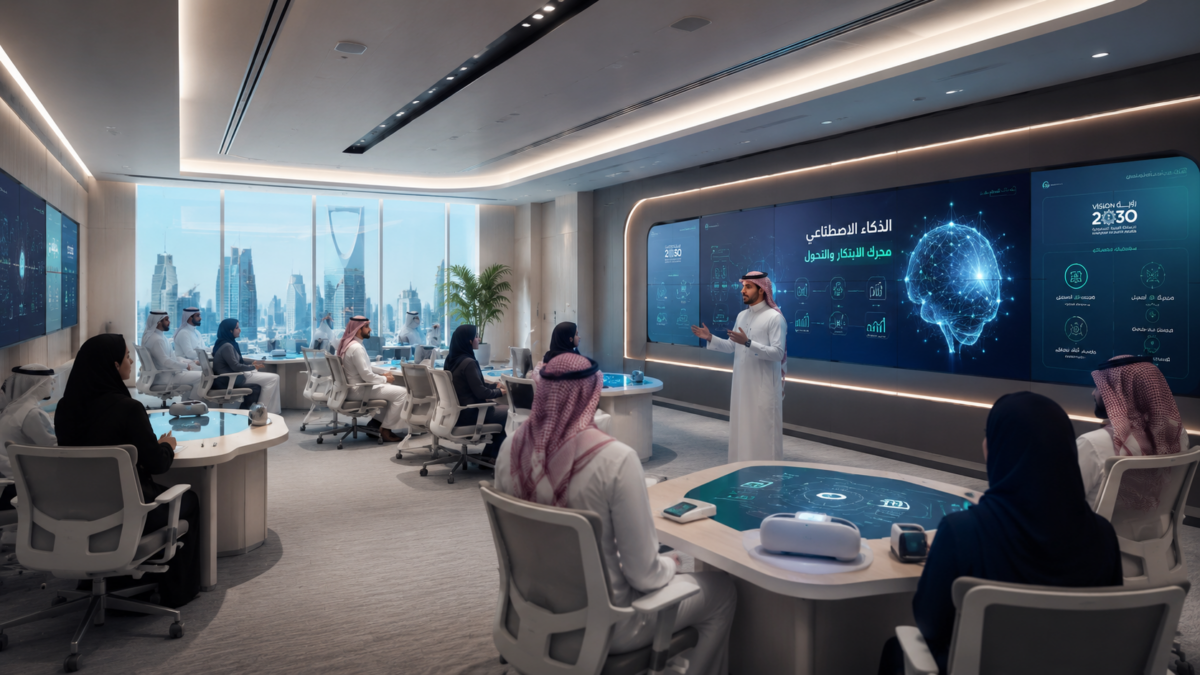
For enterprise leaders and policymakers in Saudi Arabia, the launch of the EduTech1.0 model offers an immediate architectural baseline to support the Kingdom’s Human Capability Development Program (HCDP)—a vital pillar of Vision 2030. As organizations under the Ministry of Communications and Information Technology (MCIT) and the Saudi Data and AI Authority (SDAIA) work to citizenize AI capabilities, deploying integrated smart campus architectures becomes a fundamental requirement.
By shifting away from legacy, vendor-isolated training models and adopting localized, framework-driven digital training, Saudi academic institutions can rapidly upscale their talent output. Ensuring that local university graduates possess baseline competencies in cloud engineering and localized machine learning models directly protects the Kingdom’s goal of establishing sovereign compute independence and scaling a self-reliant digital economy.