The Trans-Arabian Pipeline: Transforming Industrial History into a Cultural Landmark
The Museums Commission recently convened a virtual session to examine the profound historical and social legacy of the Trans-Arabian Pipeline, widely known as the Tapline. As part of its monthly open-meeting series, the Commission discussed how this feat of 20th-century engineering shaped the unique identity of the Northern Borders region and its potential as a cornerstone of the Kingdom’s cultural tourism.
Executive Summary
- Historical Milestone: Built in 1947, the Tapline was once the world’s largest industrial construction project.
- Regional Development: The pipeline was the primary catalyst for the emergence of modern urban centers in northern Saudi Arabia.
- Heritage Preservation: Strategy focused on converting industrial sites into contemporary museum narratives.
- Identity & Memory: Linking industrial history to the national Saudi identity through the Museums Commission’s initiatives.
A Monument to 20th-Century Engineering
Operational from 1950 to 1990, the Tapline served as a vital artery connecting the oil-rich fields of eastern Saudi Arabia to the Mediterranean coast in Lebanon. The Saudi Press Agency highlighted that while pumping has long since ceased, the physical and social infrastructure left behind remains a testament to the Kingdom’s early industrial prowess.
Experts at the meeting emphasized that the Tapline was more than a conduit for energy; it was a creator of cities. The northern regions owe much of their modern urban planning and early infrastructure to the logistical requirements of this massive project, making it a vital chapter in Saudi Arabia’s socio-economic history.
The Saudi Perspective: Industrial Heritage under Vision 2030
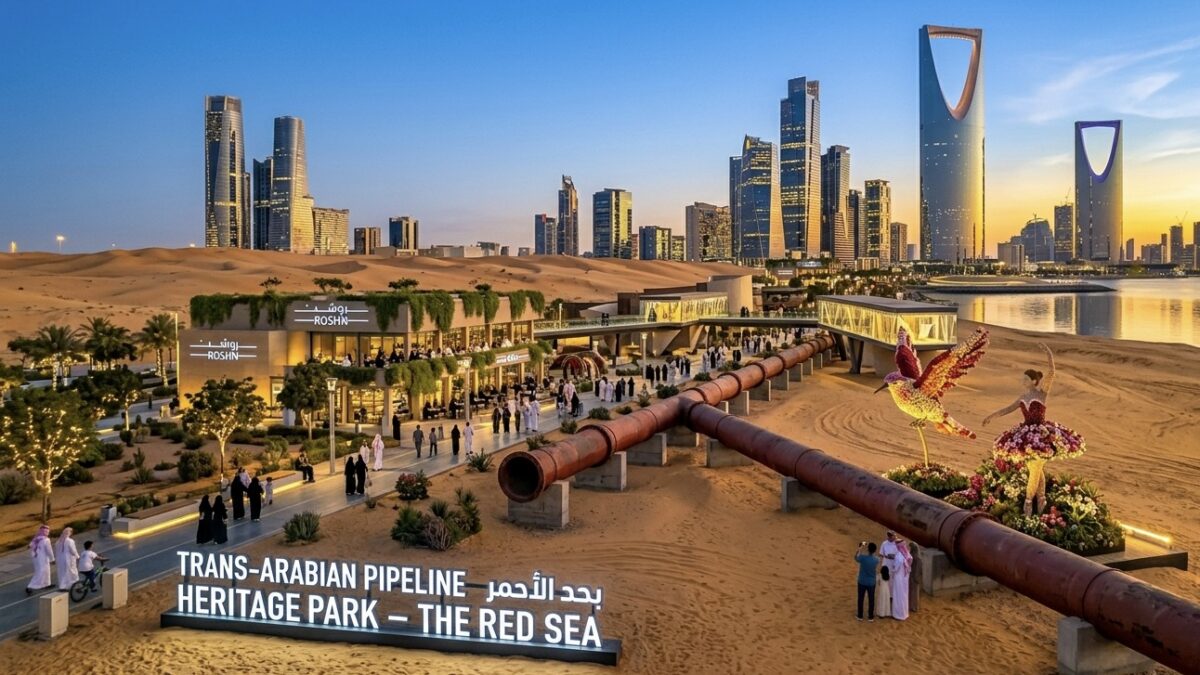
In the context of Saudi Vision 2030, the preservation of industrial heritage is becoming a key driver for the cultural economy. By transforming the Tapline into a “contemporary museum narrative,” the Museums Commission is tapping into a global trend of repurposing industrial sites for tourism and education.
This initiative aligns with the Kingdom’s goal of documenting its rapid modernization and providing digital innovation within the museum space to engage younger generations. For B2B stakeholders in the tourism and cultural sectors, the Tapline project represents a significant opportunity for development in the Northern Borders, turning historical infrastructure into a sustainable cultural asset.