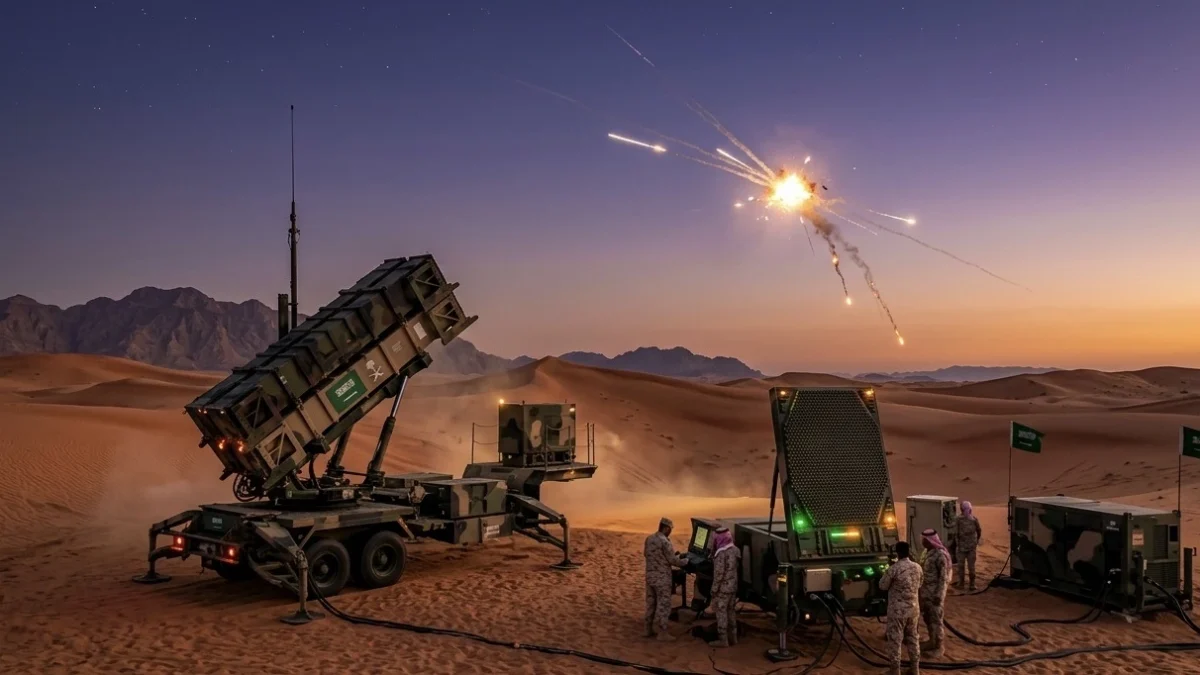
Fortifying the Skies: Saudi Air Defenses Neutralize Massive Aerial Escalation
The Saudi Ministry of Defense has released staggering technical data following a three-week kinetic campaign. Since the regional escalation began on February 28, the Kingdom’s multi-layered air defense systems have successfully intercepted 439 hostile drones and 36 sophisticated ballistic and cruise missiles, underscoring the high-stakes environment facing Gulf enterprise and infrastructure.
Executive Summary
- Unprecedented Scale: Over 475 kinetic threats neutralized within 21 days, targeting the Eastern Province and key military installations.
- Strategic Resilience: Saudi air defenses maintained near-constant operational readiness, protecting the world’s most critical energy supply chains.
- Regional Impact: The UAE reports the heaviest bombardment, engaging over 1,600 UAVs, signaling a systemic threat to GCC logistics and aviation hubs.
- Economic Safeguards: Despite the volume of fire, critical infrastructure in Shaybah and Al-Kharj remains operational, showcasing the efficacy of the Kingdom’s defense digital transformation.
Data-Driven Defense: Mapping the Strike Zones
Analytical reports from the Saudi Press Agency (SPA) indicate a calculated effort to disrupt the Kingdom’s economic heartland. Approximately 278 drones were vectored toward the Eastern Province—the nexus of Saudi Arabia’s oil refining capacity. Simultaneously, high-velocity missile strikes were concentrated on Al-Kharj, near the Prince Sultan Air Base, testing the precision and response times of sovereign defense assets.
The Saudi Perspective: Critical Infrastructure and Vision 2030
For the B2B sector and government leaders, this escalation is a stress test for Vision 2030’s resilience. The ability to maintain business continuity in the face of 439 drone incursions is a testament to the Kingdom’s massive investment in critical infrastructure defense. However, the sheer volume of these “swarming” tactics highlights an urgent need for accelerated localized manufacturing of counter-UAV (C-UAV) technologies and AI-driven threat detection. For enterprise leaders, this underscores the necessity of robust PDPL-compliant data backups and disaster recovery protocols as physical and digital security boundaries continue to blur.
The Regional Outlook: A Narrowing Window for Diplomacy
The emergency gathering of Arab and Islamic foreign ministers in Riyadh this Wednesday is no longer just a diplomatic formality; it is a vital coordination effort for collective security. With the UAE engaging over 2,000 combined projectiles, the GCC is facing a “new normal” of sustained aerial pressure. Analysts suggest that the next phase of regional stability will depend heavily on integrated early-warning systems and shared intelligence protocols across the Gulf peninsula.