Riyadh Convenes Emergency Ministerial Summit to Safeguard Regional Stability
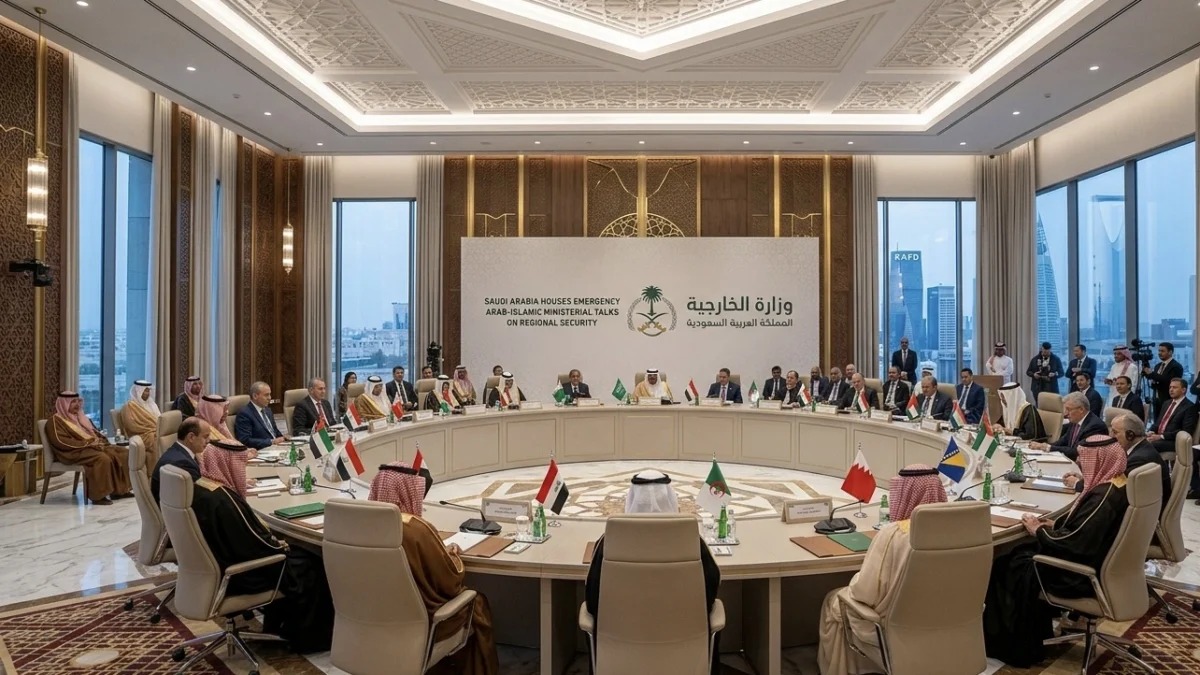
In a decisive move to address the deteriorating security landscape in the Middle East, Saudi Arabia is hosting an emergency consultative meeting of Arab and Islamic foreign ministers in Riyadh today. The summit, convened by the Kingdom’s Ministry of Foreign Affairs, seeks to establish a unified diplomatic front against escalating threats that jeopardize regional peace and global commerce.
- High-Level Coordination: Foreign ministers from across the Arab and Islamic world are gathering to synchronize responses to recent regional escalations.
- Infrastructure Protection: A primary focus remains the security of critical trade hubs and airports, which have recently faced unprecedented disruptions.
- Vision 2030 Continuity: The Kingdom emphasizes that regional stability is the foundational pillar for the success of its Giga-projects and economic diversification.
- Diplomatic Outreach: The meeting follows intensive deliberations between Saudi Foreign Minister Prince Faisal bin Farhan and his international counterparts.
Strengthening Collective Defense and Diplomacy
The gathering comes at a critical juncture following a series of sophisticated missile and drone attacks that have targeted civilian infrastructure across the Gulf. With major logistics hubs in Dubai, Doha, and Riyadh facing operational challenges due to these external threats, the Kingdom is asserting its role as the regional stabilizer. The Ministry of Foreign Affairs stated that the sessions will focus on deepening consultation to “chart a path toward de-escalation” before the crisis further impacts the broader economic landscape.
The Saudi Perspective: Defending the Transformation
For the Kingdom, these talks are about more than immediate border security; they are a defense of Vision 2030. As Saudi Arabia transitions into a global hub for tourism, technology, and logistics, the reliability of its digital and physical infrastructure is non-negotiable. The targeting of energy facilities like Ras Tanura and interference with regional aviation directly challenge the “Global Logistics Hub” pillar of the National Transformation Plan. By leading this emergency summit, Riyadh is signaling to global investors and enterprise partners that it will take all necessary diplomatic and coordinated measures to ensure the Kingdom remains a safe, stable, and attractive environment for high-tech investment and sovereign growth.
A Unified Response to Modern Threats
The involvement of a broad coalition—including representatives from the UAE, Egypt, Iraq, and Bosnia and Herzegovina—underscores the widespread recognition that modern security threats require a multilateral approach. Discussions are expected to touch upon the protection of data centers, undersea cables, and energy supply chains that are vital to the burgeoning digital economy of the GCC.