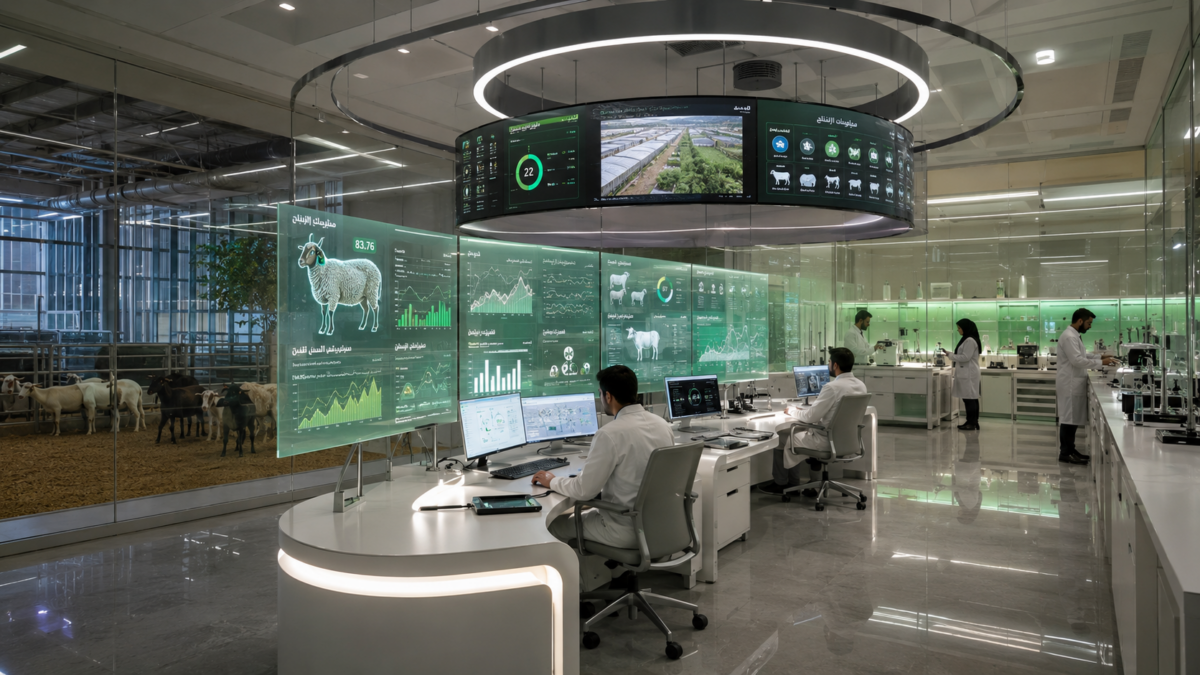
The Saudi Ministry of Environment, Water and Agriculture (MEWA) has instituted an intensified veterinary compliance and public health safety framework across the Kingdom ahead of the upcoming Hajj season. Recognizing that public health preservation is a cornerstone of smart municipal governance, MEWA has mandated precise physical and clinical standards for the selection of Udhiyah (sacrificial livestock). This regulatory push integrates strict veterinary inspections with national food safety protocols to eliminate biological risks, manage waste efficiently, and protect the domestic food supply chain during a period of massive logistical throughput.
Executive Summary
- Biosecurity Standardization: MEWA implements mandatory veterinary health indicators for livestock selectors, establishing national baselines for zoonotic disease prevention.
- Public Health Infrastructure:** Decentralized municipal monitoring loops ensure that only livestock meeting rigorous respiratory and physical benchmarks enter commercial streams.
- Digital Transformation Integration: The veterinary guidelines operate under MEWA’s broader cloud-integrated agricultural platform, tracking livestock volumes and monitoring supply resilience.
- Vision 2030 Safeguards: Direct alignment with the Pilgrim Experience Program and National Food Security Strategies to scale up preventive public health infrastructure.
Enforcing Veterinary Compliance in Mass Supply Chains
Managing the safety and distribution of livestock for millions of concurrent consumers requires an exceptionally strict regulatory approach. MEWA’s technical directive establishes strict criteria for consumers and corporate suppliers alike, demanding comprehensive visual and physiological assessments before any livestock transaction can proceed. The policy is engineered to protect the integrity of the food chain at its points of origin, ensuring complete safety from zoonotic pathology.
The Ministry has identified key health indicators that must be met prior to slaughter. Inspectors and consumers are directed to verify the absence of nasal and ocular discharges, ensure normal respiration patterns devoid of coughing, and confirm the absolute elimination of cutaneous abscesses or localized skin infections. Animals displaying clinical signs of lethargy, muscle wasting, or systemic weakness are automatically rejected from participating facilities, establishing an uncompromising standard for public safety.
Mitigating Biological Risks via Digital Oversight Platforms
Beyond manual physical checks, MEWA is leveraging its digital ecosystem to log data, track supplier compliance, and maintain real-time oversight of the Kingdom’s livestock reserves. By standardizing these safety measures, the Ministry is actively preventing outbreaks of transmissible diseases that could disrupt municipal waste networks or compromise regional food supplies during the high-demand season.
This systematic enforcement shifts the public health strategy from reactive containment to automated, preventive risk mitigation. Educational frameworks deployed across digital portals ensure that pilgrims, local breeders, and international logistics partners operate under a unified safety language, mitigating biological bottlenecks before they impact major urban and holy site centers.
Strengthening National Food Security Under Vision 2030
This biosecurity push is an operational pillar of Saudi Vision 2030’s food security roadmap. As the Kingdom dramatically increases its annual capacity for seasonal visitors, building institutional resilience in veterinary public health becomes an economic necessity. By enforcing zero-tolerance health standards, MEWA and its municipal partners are safeguarding the non-oil economy from the massive financial liabilities associated with foodborne contamination outbreaks.
The institutional focus continues to move away from temporary oversight models and toward permanent, data-driven regulatory frameworks. Transitioning traditional livestock management into a compliance-heavy, digitally monitored asset class offers lucrative opportunities for private agritech companies, biotechnology providers, and enterprise supply chain management firms looking to integrate with the Kingdom’s modernized agricultural utility networks.