Ecological Resilience: ITBReserve Achieves Key Milestone in Saudi Biodiversity Restoration with Surge in Wildlife Births
The Imam Turki bin Abdullah Royal Nature Reserve (ITBReserve) has officially recorded the birth of 12 rock hyraxes during the first quarter of 2026. This development stands as a measurable indicator of accelerating habitat recovery and ecological stabilization within the vast protected zone. Reported by the Saudi Press Agency (SPA), the births signal the operational success of localized environmental protection frameworks designed to foster self-sustaining wildlife ecosystems.
Executive Summary
- Targeted Population Growth: The reserve documented 12 rock hyrax births in Q1 2026, validating specialized breeding and protection programs.
- Broad Ecosystem Recovery: Over 90 total wildlife births were recorded in the same period, including Arabian gazelles, Arabian oryx, Cape hares, and red-necked ostriches.
- Transition to Natural Reproduction: Enhanced habitat management has successfully enabled reintroduced species to reproduce naturally in the wild without human intervention.
- Vision 2030 Alignment: The scaling of the 104,800-square-kilometer reserve directly advances the Kingdom’s sovereign sustainability and environmental conservation mandates.
The rock hyrax births are part of a broader, systemic wave of wildlife reproduction across the reserve. During the first quarter of 2026 alone, the ITBReserve Development Authority documented more than 90 births spanning multiple native species, such as the Arabian gazelle, Arabian oryx, Cape hare, and red-necked ostrich. Enterprise environmental experts emphasize that this surge highlights a critical operational shift: target species are transitioning from reliance on captive breeding to natural reproduction in the wild, proving the efficacy of the reserve’s long-term reintroduction models.
Advanced Environmental Management Across 104,800 Square Kilometers
The rock hyrax is a small, herbivorous mammal highly adapted to rugged terrains, utilizing caves and deep rock crevices to shield itself from apex predators and extreme desert climates. Its presence is vital to maintaining vegetation equilibrium and supporting the foundational tiers of the regional food chain. Ensuring the survival of such species requires highly coordinated land management across a massive geographical footprint.
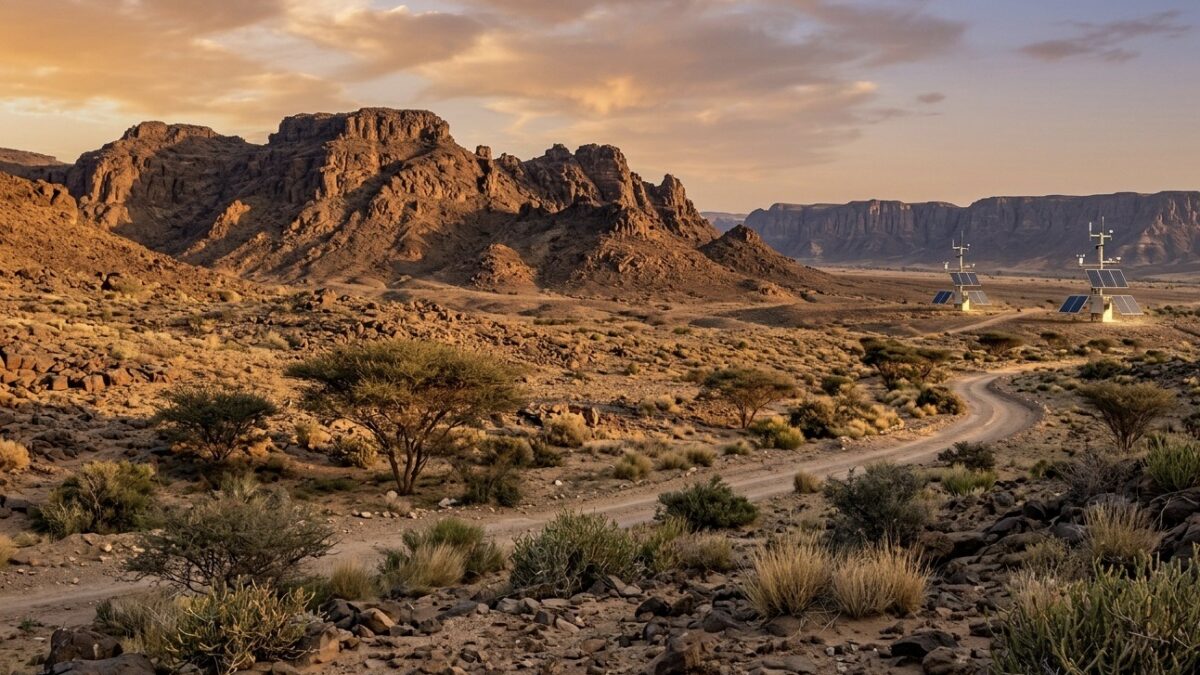
Established by royal decree in 2018, the reserve encompasses 104,800 square kilometers, intersecting Al-Jouf, Qassim, Hail, and the Northern Borders. Under the stewardship of the Imam Turki Bin Abdullah Royal Nature Reserve Development Authority, the territory features highly diverse topographies, including sand dunes, basalt plateaus, wadis, and seasonal floodplains. To maintain ecological integrity across these varied zones, authorities have scaled up active protection measures, combining anti-poaching patrols with native reforestation and rangeland rehabilitation.
Technology-Driven Conservation Under the Saudi Green Initiative
As Saudi Arabia intensifies its commitment to sustainable land use, the reserve’s strategy increasingly leverages modern monitoring paradigms. Wildlife management teams utilize scientific field surveys alongside aerial observation networks to track herd movements, assess vegetative health, and safeguard vulnerable habitats from degradation. This data-driven approach ensures the protection of critical keystone species, including the caracal, sand gazelle, and migratory birds like the Asian houbara.
By transforming degraded desert landscapes into thriving biological corridors, the ITBReserve directly contributes to the overarching targets of the Saudi Green Initiative (SGI). For enterprise leaders and state stakeholders, the continuous stabilization of these habitats reflects the economic and ecological value of investing in , securing the Kingdom’s natural capital for future generations.