Green Impact: Saudi Environment Week 2026 Showcases Major Ecological Milestones
The Ministry of Environment, Water and Agriculture (MEWA) has officially inaugurated Saudi Environment Week 2026 (May 3–9) under the theme “Green Impact.” This year’s event marks a pivotal shift from policy planning to measurable outcomes, demonstrating how the Kingdom is successfully translating the ambitious goals of Saudi Vision 2030 into tangible environmental restoration and stronger institutional governance.
Executive Summary
- Scaling Protection: The total area of protected zones across the Kingdom has more than quadrupled.
- Circular Economy: Waste recycling rates have more than tripled through enhanced compliance and infrastructure.
- Massive Afforestation: Approximately 159 million trees have been planted using renewable water sources.
- Land Rehabilitation: Over one million hectares of desertified land have been successfully rehabilitated.
- Industrial Compliance: More than 90% of industrial facilities have now secured official environmental permits.
Strategic Partnerships and Institutional Reform
Minister Abdulrahman Al-Fadley opened the week in Riyadh, highlighting a new institutional framework designed to bolster national sustainability. A key highlight of the launch was the signing of 44 strategic partnership agreements aimed at strengthening afforestation projects and broadening the reach of environmental initiatives. Osama Ibrahim Faqeeha, Deputy Minister for Environment, noted that these agreements signify a qualitative shift in how the Kingdom delivers environmental protection, backed by updated regulations and increased compliance capacity.
The Rise of the “Green University”
Sustainability is also being integrated into the Kingdom’s higher education sector. In collaboration with the United Nations Environment Programme (UNEP), the Council of Universities’ Affairs organized a workshop detailing the “Green University” concept. This framework rests on five critical pillars: green education, research and innovation, campus operations, community engagement, and governance. By embedding these values into the academic ecosystem, the Kingdom is ensuring that the next generation of Saudi leaders is equipped to drive the creative and green economies.
From Awareness to Convenience: The Behavioral Challenge
While awareness is high, experts are now focusing on closing the gap between knowledge and action. Sustainability leader Majed Al-Qatari emphasized that the effectiveness of Saudi Environment Week should be measured by data-driven behavior changes, such as reduced food waste and improved public transport ridership. According to Al-Qatari, the primary challenge moving forward is making sustainable choices the most convenient option for residents in their daily lives.
Research-Driven Restoration
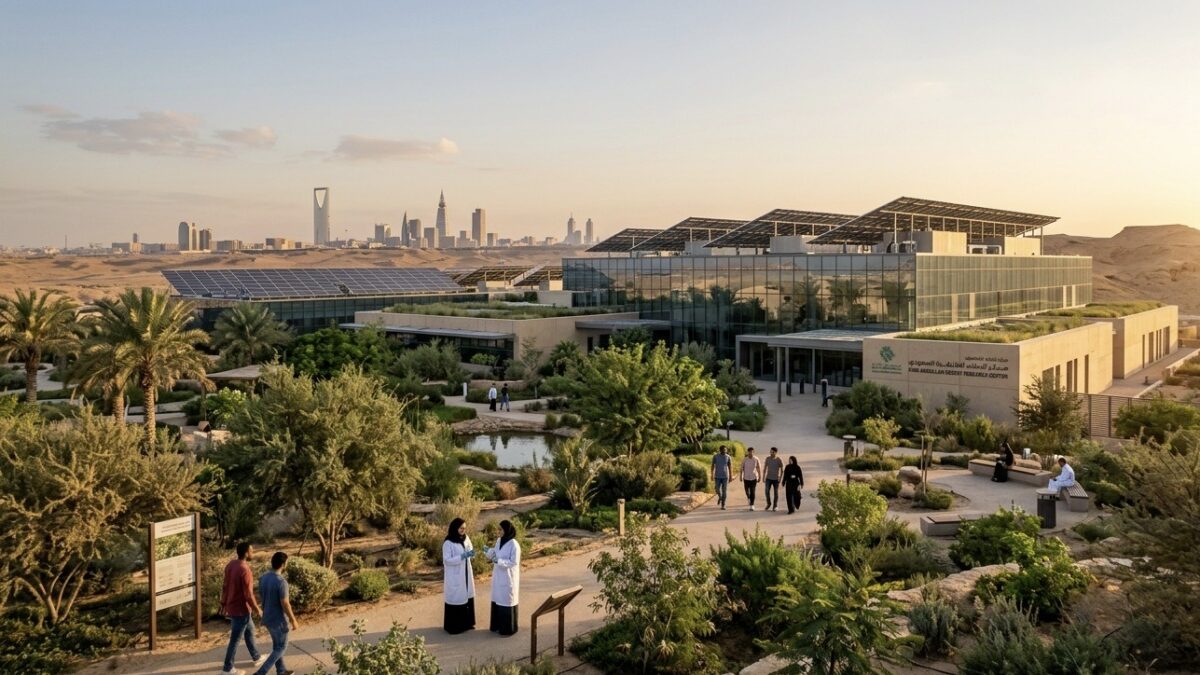
The focus on dryland ecology remains central to the Saudi Green Initiative (SGI). Prof. Fernando T. Maestre of King Abdullah University of Science and Technology (KAUST) noted that understanding how dryland ecosystems respond to climate change and overgrazing is essential for designing scalable restoration efforts. These scientific insights are fueling the Kingdom’s ability to combat desertification and dust storms through technology-driven interventions like cloud seeding and meteorological expansion.