How the Northern Borders Region is Anchoring Saudi Food Security
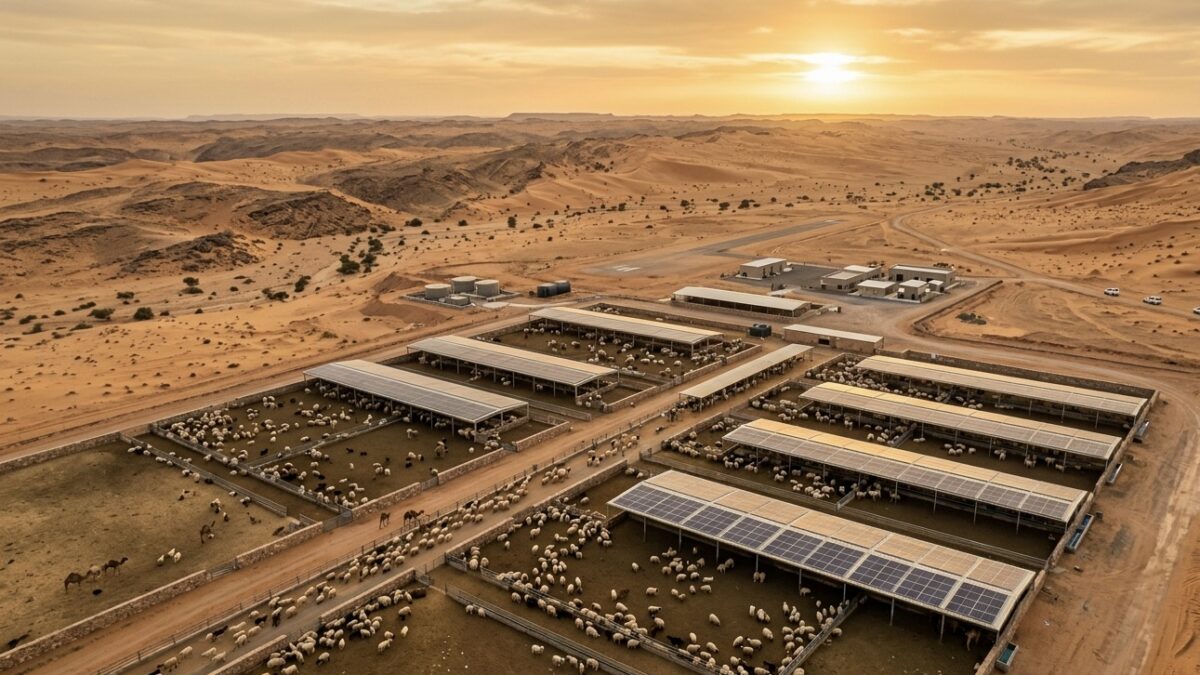
Saudi Arabia’s Northern Borders region has rapidly materialized as a core pillar of the Kingdom’s national food security and rural development strategy. A recent report released by the regional branch of the Ministry of Environment, Water and Agriculture (MEWA), and carried by the Saudi Press Agency, reveals that the province’s livestock numbers have officially surpassed 7.5 million head. This massive agricultural expansion directly underscores the Kingdom’s broader push under Vision 2030 to localize supply chains, modernize legacy industries, and curb reliance on volatile global meat imports.
Executive Summary
- Scale of Production: The Northern Borders province currently holds 7,551,997 head of livestock, heavily dominated by a thriving population of 7,258,950 sheep.
- Government Interventions: Targeted MEWA support programs for smallholder farmers are successfully driving breeding efficiency via integrated veterinary care, automated vaccination campaigns, and technical advisory networks.
- The Vision 2030 Mandate: The region’s exponential growth serves as a tactical template for national food security, balancing traditional pastoralism with sustainable modern tech practices.
- Ecological Balancing Act: Amid mounting desertification and water depletion pressures, MEWA and the UN Food and Agriculture Organization (FAO) are actively introducing precision rangeland management frameworks to preserve fragile desert ecosystems.
Analyzing the Ruminant-Heavy Landscape
The latest data from MEWA and the General Authority for Statistics (GASTAT) positions the Northern Borders as a structural reflection of the broader Saudi livestock economy, where sheep breeding remains the dominant asset class. On a nationwide scale, the Kingdom’s sheep population stands at approximately 22.1 million head, supplemented by 7.3 million goats and a herd of 2.24 million camels. Cattle numbers total roughly 516,000 head, with highly commercialized dairy operations concentrated primarily across Riyadh and the Eastern Province. These industrial dairy assets yield an impressive 2.7 billion liters of raw milk annually, creating a unique economic contrast between advanced agritech hubs and the traditional pastoralism driving the northern rangelands.
Balancing Agribusiness Growth with Ecological Pressures
Despite robust production gains, regional enterprise leaders and public sector stakeholders must navigate structural climate and ecological bottlenecks. Groundwater depletion and acute vegetation degradation across the Arabian Peninsula present long-term operational risks to natural pastures. To mitigate these disruptions, MEWA is standardizing strictly regulated grazing patterns and ecosystem monitoring tools. For B2B stakeholders, agritech solutions and automated supply chain tracking will be essential to maintaining high output levels without compounding local environmental strains.