Beyond the Sands: How the Saudi Green Initiative is Redefining the Kingdom’s Landscape
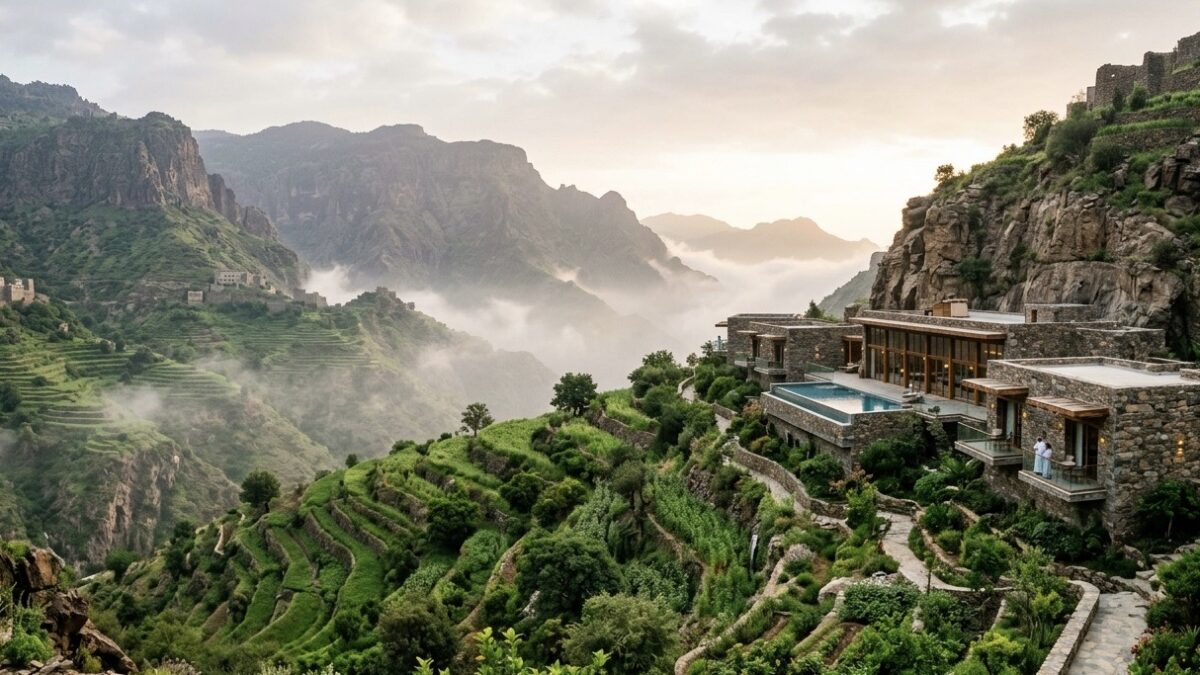
Recent seasonal rains across Saudi Arabia have done more than just cool the air; they have provided a vivid preview of the “Green Arabia” envisioned under the Saudi Green Initiative (SGI). From the mist-covered mountains of Al-Baha to the revitalized meadows of Rafha, the Kingdom’s shifting topography is increasingly becoming a cornerstone of its non-oil economic diversification.
- Economic Diversification: Greening projects are accelerating the growth of eco-tourism and adventure travel in regions like Al-Baha and Hail.
- Technological Integration: The National Center for Meteorology and SDAIA are leveraging AI for precision weather forecasting and flood management.
- Vision 2030 Alignment: Sustainable land restoration is a primary pillar in improving the “Quality of Life” for Saudi citizens and residents.
- Environmental Leadership: The Kingdom has already rehabilitated over one million hectares of land as of March 2026.
Strategic Transformation of the Saudi Hinterland
The transformation seen during the recent Eid Al-Fitr holiday—where waterfalls cascaded down the rocky cliffs of Al-Baha and sand dunes in Qassim were compacted into ideal terrains for sustainable desert camping—is no longer a mere seasonal fluke. It is the result of a coordinated national strategy. By integrating traditional land management with modern technology, Saudi Arabia is turning environmental challenges into premium tourism assets.
In the Hail region, the Aja and Salma mountains have become focal points for seasonal camps, signaling a surge in domestic “staycation” demand. This shift supports the Kingdom’s goal of welcoming 150 million visitors by 2030, emphasizing that Saudi Arabia’s geographical diversity is its next great export.
The Saudi Perspective: Tech-Driven Resilience
While the rains are natural, the management of their impact is a feat of 21st-century engineering. Under the Year of AI 2026, the Saudi Data and Artificial Intelligence Authority (SDAIA) and the National Center for Meteorology (NCM) have deployed advanced predictive models to manage flood-prone areas and optimize rainwater harvesting.
For B2B leaders and tech investors, this represents a massive opportunity in “AgriTech” and “HydroTech.” The Kingdom is currently constructing 1,000 rainwater-harvesting dams, integrating IoT sensors to monitor water levels and soil moisture in real-time. This ensures that the brief seasonal rains provide long-term benefits to the 10 billion trees planned under the SGI framework.
Safety and Infrastructure: A National Priority
As the National Center for Meteorology issues warnings for further rainfall, the focus shifts to the resilience of our smart infrastructure. Civil defense authorities are utilizing real-time data to manage traffic and public safety, proving that the digital transformation of the Kingdom is as much about safety as it is about innovation. These efforts underscore the Kingdom’s commitment to building a sustainable, livable environment that honors both its heritage and its future.