Sovereign supply chains: Mawani accelerates Red Sea port infrastructure to mitigate Strait of Hormuz macro risks
The Saudi Ports Authority (Mawani) has strategically scaled its maritime transit framework across the Red Sea, launching high-capacity cargo corridors designed to safeguard supply-chain resilience and bypass escalating security vulnerabilities surrounding the Strait of Hormuz. Faced with ongoing geopolitical pressures at critical trade chokepoints, the Kingdom is aggressively redirecting logistics pipelines to deepwater ports along its western coast. This infrastructure expansion—executed through new commercial shipping agreements connecting Saudi Arabia with Oman, Djibouti, Egypt, and Jordan—solidifies the nation’s baseline capacity to handle volatile global trade flows.
Executive Summary
- Strategic Geopolitical Redirection: Mawani is expanding redundant cargo shipping networks via the Red Sea to insulate national commerce from Strait of Hormuz chokepoint risks.
- Advanced Visual Logistics: Newly operational routes linking Jeddah and Yanbu add thousands of TEUs in immediate carrying capacity, accelerating non-oil export efficiency.
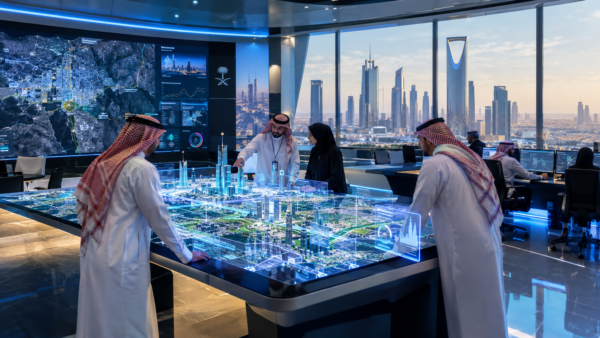
- Vision 2030 Integration: Multi-billion-dollar investments in autonomous port automation and automated customs systems are turning the Kingdom’s maritime hubs into world-class smart cities logistics nodes.
As international maritime lines reassess structural shipping risk, Saudi Arabia’s geographic positioning connecting Asia, Europe, and Africa gives it an unmatched operational edge. By modernizing physical berths and deploying digital management frameworks, the Kingdom ensures cargo flexibility while insulating the wider GCC from systemic supply-chain shocks.
Strategic multi-port routes: Jeddah Islamic Port and Yanbu hubs
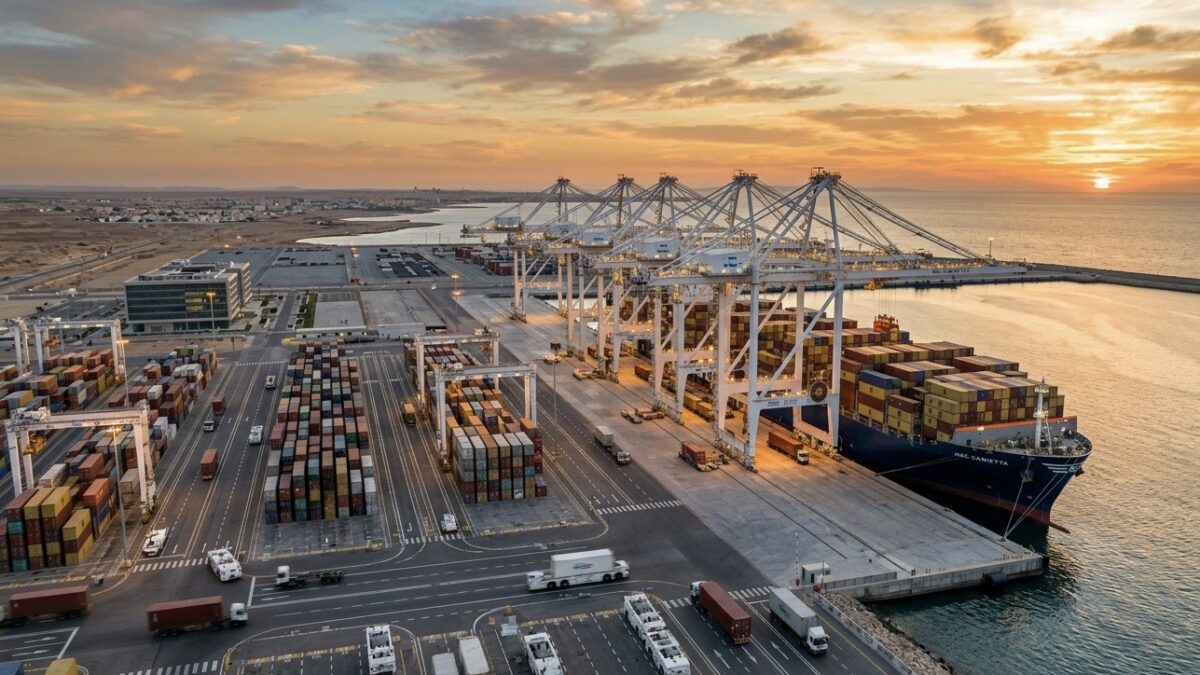
The newest freight corridor systematically ties Jeddah Islamic Port to the strategic transshipment hubs of Salalah in Oman and the Port of Djibouti. Boasting a localized carrying capacity of up to 1,730 twenty-foot equivalent units (TEUs), this deployment handles high-velocity import and export volumes, dramatically lowering turnaround times for multi-national brands.
Simultaneously, Mawani has launched the “Red Sea Express” initiative out of the King Fahd Industrial Port in Yanbu. Developed through public-private cooperation with regional carrier Folk Maritime and petrochemical enterprise SABIC, this specific framework connects western industrial hubs to Ain Sokhna in Egypt and Aqaba in Jordan. Operating with an initial baseline capacity of 1,100 TEUs, the line significantly shortens delivery timelines for raw plastics, chemical products, and agricultural goods—crucial steps in expanding the Kingdom’s non-oil GDP footprint.
The Saudi Lens: Transforming maritime logistics into smart city nodes
For B2B technology leaders, global port operators, and supply-chain executives, Mawani’s industrial expansion proves how deeply national defense, smart city design, and global trade are intertwined under Saudi Vision 2030. King Fahd Industrial Port in Yanbu—already commanding an annual throughput capacity of 210 million tonnes—is moving beyond traditional shipping to become an automated, hyper-connected digital gateway.
To win the race for regional dominance against neighboring hubs, Saudi Arabia is investing heavily in a unified digital layer to optimize its transport networks. This structural shift focuses on three main pillars:
1. Port automation and predictive IoT layers
Modern terminal expansions use automated crane management systems, autonomous terminal trucks, and smart asset tracking. These technologies allow terminal operators to streamline container sorting, predict equipment maintenance needs, and manage berths with minimal manual oversight.
2. Cloud-based customs architectures
By streamlining documentation through integrated digital platforms, cross-border clearance timelines have dropped from days to a matter of hours. These digital workflows clear logistics backlogs, giving enterprise cargo liners a predictable, reliable experience.
3. Seamless intermodal transit networks
Modern smart infrastructure ties maritime berths directly to regional rail networks, airports, and industrial zones. This creates a highly responsive freight system that can dynamically reroute cargo when global trade routes are disrupted.
By backing physical Red Sea maritime assets with top-tier smart city tech, Saudi Arabia is safeguarding its borders against global supply shocks while cementing its position as the leading logistics capital connecting three continents.