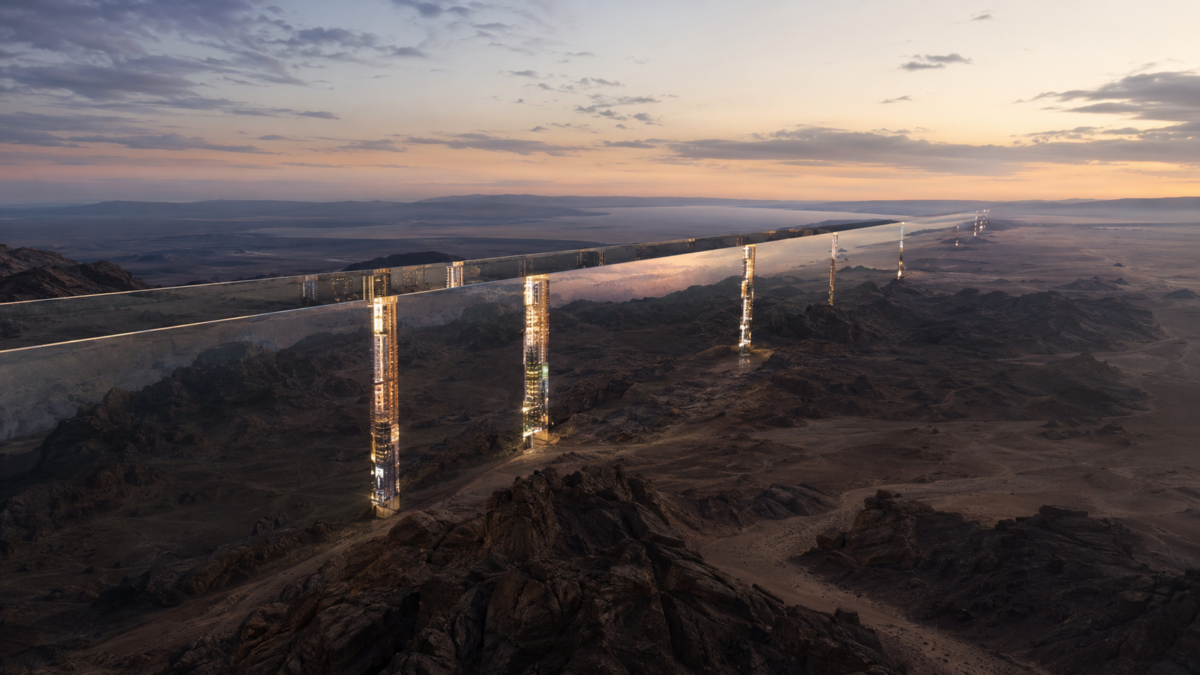
As international focus converges on the next frontier of sustainable civic engineering, Saudi Arabia’s flagship smart city project, The Line NEOM, stands as the world’s most sophisticated and ambitious urban development experiment. Conceptualized to fundamentally challenge standard horizontal urban sprawl, this linear megacity represents a radical departure from traditional civil engineering models, replacing them with a highly efficient cognitive environment.
Executive Summary
- Paradigm-Shifting Geometry: A linear, hyper-compact smart city design measuring 170km in length and only 200 meters in width.
- Zero Gravity Urbanism: Employs a unique vertical stacking methodology to eliminate horizontal urban sprawl completely.
- 100% Sustainable Grid: Completely car-free environment powered entirely by solar, wind, and green hydrogen networks.
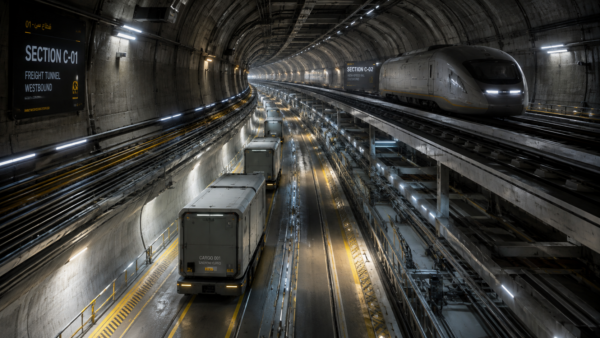
- Next-Gen Mobility Layer: Features an underground transit spine delivering end-to-end travel in under 20 minutes.
- AI-Driven Optimization: Managed by an advanced cognitive operating system utilizing real-time predictive analytics.
Stretching 170 kilometers across the distinctive desert and coastal terrains of northwestern Saudi Arabia, the multi-tiered development eliminates the need for legacy automotive networks and conventional roads. Instead, it positions a car-free, zero-emission transportation network as its foundational layer, establishing a brand-new blueprint for sustainable living at scale.
The Architecture of Vertical Layering (Zero Gravity Urbanism)
Unlike standard urban areas that expand outward and claim vital natural ecosystems, The Line utilizes a design philosophy known as Zero Gravity Urbanism. By vertically stacking residential, commercial, public, and natural spaces within a hyper-compact layout that is only 200 meters wide, the design guarantees that everyday services are easily accessible within a brief five-minute walk.
This layout operates as a fully integrated ecosystem, powered entirely by renewable energy sources—primarily solar, wind, and green hydrogen networks. Underneath, a high-speed transit backbone delivers hyper-connectivity, ensuring a maximum transit time of just 20 minutes from end to end.
Engineering Matrix: Structural & Digital Infrastructure
| Infrastructure Layer | Core Technology & Systems |
|---|---|
| Cognitive Operating System | NEOM’s predictive AI engines utilizing real-time IoT sensor arrays to optimize city resource allocation automatically. |
| Mobility Sub-Layer | Underground high-speed rail networks alongside autonomous transit modules operating off the main public grid. |
| Environmental Protection | Mirror-faced external facades integrated with internal micro-climate conditioning to protect local biodiversity. |
The Execution Challenge: Megaprojects of this size naturally encounter complex financial, logistical, and structural engineering hurdles. Excavating and building across diverse terrain requires deep long-term capital allocation, highly resilient global supply chains, and complex construction strategies.
While the long-term timeline will scale alongside technological innovations and macro-financial variables, the sheer engineering ambition of this project remains unmatched. For technology vendors and enterprise leaders within the GCC, the ongoing development highlights a historic opportunity to build, test, and export next-generation technologies within the world’s most advanced smart cities sandbox.