Riyadh. In a decisive structural move designed to optimize the economic engine of the Kingdom, a new Saudi Arabian royal decree has expanded the responsibilities of Energy Minister Prince Abdulaziz bin Salman. The veteran energy strategist has been officially appointed as the Minister of Industry and Mineral Resources, merging the leadership of the nation’s most capital-intensive industrial portfolios under a unified command structure.
Executive Summary
- Leadership Consolidation: Energy Minister Prince Abdulaziz bin Salman assumes total oversight of the consolidated Energy, Industry, and Mineral Resources ministries.
- Strategic Transition: Former Minister Bandar Alkhorayaf transitions to Minister of State and will head the General Authority for Military Industries (GAMI).
- Asset Valuation: Unlocks streamlined regulatory access to an estimated $2.5 trillion in untapped mineral wealth.
- Vision 2030 Acceleration: Eliminates bureaucratic silos between upstream energy extraction, heavy manufacturing, and mineral localization.
The strategic government realignment represents a deliberate effort to maximize cross-sector coordination as the Kingdom enters the definitive execution phase of its Vision 2030 transformation agenda. By aligning these sectors, the Saudi leadership is positioning the nation to respond rapidly to shifts in global trade supply chains, international manufacturing, and mineral exploration markets.
Unlocking the $2.5 Trillion Mining Engine
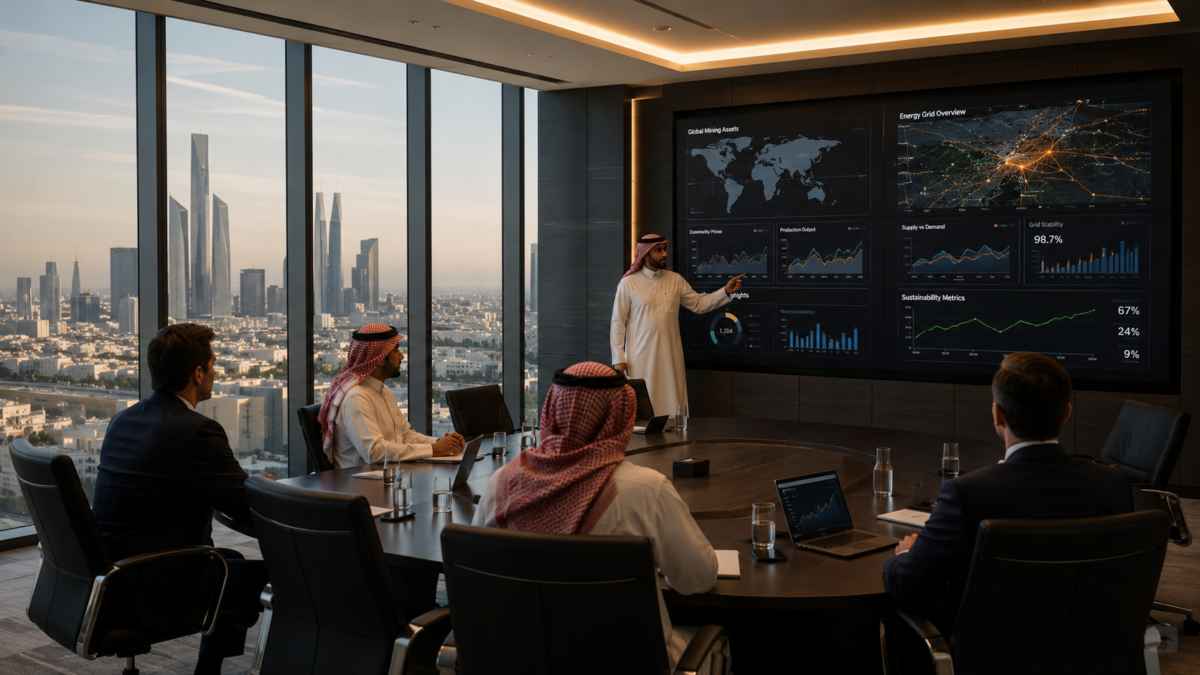
Saudi Arabia has designated the mining sector as the foundational third pillar of its modern industrial economy, alongside petroleum and petrochemicals. The Kingdom’s untapped mineral inventory, valued at a conservative $2.5 trillion, includes vast deposits of phosphate, gold, copper, bauxite, and critical rare earth elements essential for global technology production.
Under this integrated governance framework, policy execution is expected to accelerate significantly. Unifying the portfolios removes legacy bureaucratic frictions, allowing the government to rapidly implement large-scale localization strategies, streamline mining concessions, and build out complex downstream industrial manufacturing hubs.
Strategic Focus on Military Localization and GovTech Innovation
As part of the structural update, Bandar Alkhorayaf will leverage his extensive industrial experience to steer the General Authority for Military Industries (GAMI) as Minister of State. This emphasizes the government’s target of localizing more than 50 percent of its military spending by 2030, transforming defense procurement into a domestic high-tech manufacturing driver.
This restructuring showcases the evolution of modern corporate statecraft in the GCC. The deployment of unified policy models represents a broader trend in regional GovTech systems designed to build an agile, data-driven, and highly transparent public sector environment, a shift also visible in the Kingdom’s recent AI governance partnerships. This structural evolution provides enterprise investors with unprecedented predictability across interconnected industrial projects.
For official documentation regarding these updates, access the verified regional reporting provided via Arab News.
Riyadh. In a decisive structural move designed to optimize the economic engine of the Kingdom, a new Saudi Arabian royal decree has expanded the responsibilities of Energy Minister Prince Abdulaziz bin Salman. The veteran energy strategist has been officially appointed as the Minister of Industry and Mineral Resources, merging the leadership of the nation’s most capital-intensive industrial portfolios under a unified command structure.
Executive Summary
- Leadership Consolidation: Energy Minister Prince Abdulaziz bin Salman assumes total oversight of the consolidated Energy, Industry, and Mineral Resources ministries.
- Strategic Transition: Former Minister Bandar Alkhorayaf transitions to Minister of State and will head the General Authority for Military Industries (GAMI).
- Asset Valuation: Unlocks streamlined regulatory access to an estimated $2.5 trillion in untapped mineral wealth.
- Vision 2030 Acceleration: Eliminates bureaucratic silos between upstream energy extraction, heavy manufacturing, and mineral localization.
The strategic government realignment represents a deliberate effort to maximize cross-sector coordination as the Kingdom enters the definitive execution phase of its Vision 2030 transformation agenda. By aligning these sectors, the Saudi leadership is positioning the nation to respond rapidly to shifts in global trade supply chains, international manufacturing, and mineral exploration markets.
Unlocking the $2.5 Trillion Mining Engine
Saudi Arabia has designated the mining sector as the foundational third pillar of its modern industrial economy, alongside petroleum and petrochemicals. The Kingdom’s untapped mineral inventory, valued at a conservative $2.5 trillion, includes vast deposits of phosphate, gold, copper, bauxite, and critical rare earth elements essential for global technology production.
Under this integrated governance framework, policy execution is expected to accelerate significantly. Unifying the portfolios removes legacy bureaucratic frictions, allowing the government to rapidly implement large-scale localization strategies, streamline mining concessions, and build out complex downstream industrial manufacturing hubs.
Strategic Focus on Military Localization and GovTech Innovation
As part of the structural update, Bandar Alkhorayaf will leverage his extensive industrial experience to steer the General Authority for Military Industries (GAMI) as Minister of State. This emphasizes the government’s target of localizing more than 50 percent of its military spending by 2030, transforming defense procurement into a domestic high-tech manufacturing driver.
This restructuring showcases the evolution of modern corporate statecraft in the GCC. The deployment of unified policy models represents a broader trend in regional GovTech systems designed to build an agile, data-driven, and highly transparent public sector environment, a shift also visible in the Kingdom’s recent AI governance partnerships. This structural evolution provides enterprise investors with unprecedented predictability across interconnected industrial projects.
For official documentation regarding these updates, access the verified regional reporting provided via Arab News.